How Many Mock Tests Are Needed for CLAT 2027?
Share this article:

Introduction
Every CLAT aspirant eventually runs into the same question: How many mock tests should I take?
Telegram groups flaunt numbers like 80, 120, or even 200. Coaching ads glorify bulk mock attempts. Seniors casually say, “Just give more mocks.”
CLAT 2026 quietly exposed how misleading this thinking is.
Thousands of students attempted a massive number of mocks, yet many underperformed. Not because they didn’t work hard, but because they misunderstood what CLAT mock tests are actually meant to do.
Mocks are not practice sheets.They are not revision tools.
They are not confidence boosters.
They are diagnostic instruments designed to shape decision-making under pressure.
This blog explains how many CLAT mock tests are actually required for CLAT 2027, and more importantly, how to use them so they improve your rank, not just your anxiety.
Best CLAT Coaching Online 2026–2027 by NLTI
What Is the Real Purpose of CLAT Mock Tests?
Most students treat CLAT mock tests like worksheets: solve, check score, move on.
That is not what mocks are for.
A mock is not meant to teach you content.
It is meant to expose how you behave under exam pressure.
CLAT test series exist to simulate:
• Fatigue
• Time pressure
• Section displacement
• Decision stress
• Overconfidence traps
• Panic-based guessing
Mocks are behavioural training tools, not academic ones.
CLAT is not a syllabus-heavy exam. It is a decision-based exam. And the only way to train decisions is through simulated conditions, not through theory.
That is why the number of CLAT mock tests matters far less than how intelligently they are used.
What CLAT 2026 Taught Us About Mock Usage
CLAT 2026 was a wake-up call for the mock culture.
Several patterns became obvious:
1. Speed-based habits collapsed
Students who practiced aggressive attempt strategies failed when analytical reasoning required slower, structured thinking.
2. GK overload backfired
A large number of GK errors were not due to ignorance but due to memory fatigue from excessive information intake and shallow revision.
3. Logical reasoning punished rush
Analytical sets required deduction, not elimination tricks. Speed-first habits created cascading errors.
4. Fatigue mattered more than preparation
Students who attempted too many full-length CLAT mock tests showed mental exhaustion during the actual exam.
The lesson was clear:
CLAT 2027 preparation must treat mocks as precision tools, not volume workouts.
Read More: How Online CLAT Courses Transform Exam Preparation
Why the Question “How Many Mocks?” Is Actually the Wrong Question
“How many mocks should I take?” sounds sensible.
But it is logically flawed.
Mock effectiveness follows the law of diminishing returns.
The first 10–15 well-analysed mocks can dramatically improve performance.
The next 10–15 add smaller gains.
Beyond that, improvement flattens unless analysis quality improves.
Taking more CLAT mock tests does not automatically improve readiness. It often creates a false sense of familiarity.
Readiness comes from:
• Understanding why you make mistakes
• Fixing repeatable errors
• Stabilising accuracy
• Calibrating time behaviour
• Building decision discipline
None of these come from raw exposure.
That is why the real question is not how many, but how used.
Types of CLAT Mock Tests (Most Students Mix These Up)
One major reason aspirants misuse CLAT test series is that they treat all mocks as the same. They are not.
Sectional Mocks
These isolate one section at a time.
They are used to:
• Build foundational skills
• Fix accuracy gaps
• Learn question behaviour
• Identify section-specific traps
• Improve comprehension discipline
Sectional mocks should dominate early preparation.
Using full-length mocks too early is like running a marathon before learning to walk properly.
This is why CLAT sectional mocks matter more than people realise.
Full-Length Mocks
These simulate the real exam environment.
They are used to:
• Train stamina
• Practise section switching
• Test time distribution
• Observe decision patterns
• Measure pressure response
CLAT full length mocks are not meant to teach you concepts. They test how well you integrate everything under stress.
They should not be started blindly or too early.
Hybrid Mocks
These mix two or three sections.
They are useful for:
• Cross-section fatigue simulation
• Transitional practice
• Building attention endurance
They are underused but highly effective when planned correctly.
Read More: How Online CLAT Courses Transform Exam Preparation
Why Students Confuse These Three (And Pay the Price)
Most aspirants jump straight into full-length CLAT mock tests because they feel more “serious”.
This creates three problems:
• They practise mistakes instead of fixing them
• They mistake exposure for mastery
• They burn mental energy too early
CLAT 2027 will reward stability, not bravado.
The number of CLAT mock tests you attempt will not save you if your usage strategy is wrong.
Stage-Wise CLAT Mock Strategy for 2027
CLAT mock tests must be aligned with your stage of preparation. Using the same mock frequency throughout the year is one of the biggest CLAT preparation mistakes.
Your mock strategy must evolve.
Read More: Online vs Offline CLAT 2026 Coaching: Which Is Better?
Phase 1: Foundation Phase (Early Prep)
This phase is about building skills, not testing them.
What to do: • Only sectional mocks
• No full-length mocks
• Focus on comprehension, deduction, and accuracy
• Identify weak areas early
Why full mocks are harmful here: You don’t yet have stable skills. Full-length CLAT mock tests at this stage train confusion, not clarity.
Mock frequency: • 2–3 sectional mocks per week per weak section
• Deep review after every attempt
Phase 2: Skill Consolidation Phase
This is where most aspirants should begin full-length CLAT mock tests.
What to do: • 1 full mock every 10–14 days
• Continue heavy sectional practice
• Start experimenting with section order
• Build time discipline
Why fewer mocks work better here: You are still learning patterns. Too many full mocks prevent reflection.
Mock frequency: • 2–3 full mocks per month
• Sectionals continue weekly
Phase 3: Performance Phase
This is where full-length mocks become central.
What to do: • Simulate real exam conditions
• Practice consistent attempt logic
• Build emotional neutrality
• Refine skipping strategy
Mock frequency: • 1–2 full mocks per week
• Sectionals only for persistent weak areas
This is when your CLAT test series should be used most actively.
Phase 4: Final Phase
This is the phase most students misuse.
What to do: • Reduce mock frequency
• Focus on revision
• Strengthen confidence
• Avoid burnout
What NOT to do: • Daily mocks
• New test series
• Aggressive attempts
Mock frequency: • 1 mock every 7–10 days
• High-quality review only
CLAT mock tests are not confidence pills. They are diagnostic tools.
Read More: CLAT 2026 Guide: Exam Structure, Syllabus & Eligibility
How Many CLAT Mock Tests Are Actually Required?
There is no magical number. But there are ranges.
Minimum Effective Range
Below this, learning is incomplete.
• 25–35 full-length mocks
• 80–120 sectional mocks
This is the minimum to expose patterns and stabilize decisions.
Optimal Range
This is where most rank improvement happens.
• 35–50 full-length mocks
• 120–180 sectional mocks
Beyond this, gains slow down unless analysis quality improves.
Counterproductive Range
This is where damage begins.
• 70+ full-length mocks
• Blind attempts
• No deep review
At this point, fatigue increases, confidence fluctuates, and learning plateaus.
More CLAT mock tests do not equal better performance.
Why Most Students Waste Their CLAT Mocks
The problem is not effort. It is misuse.
Most aspirants:
• Check scores, not mistakes
• Compare ranks, not patterns
• Jump between test series
• Don’t maintain error logs
• Never reattempt wrong sets
• Don’t review decision logic
This turns CLAT mock tests into emotional experiences, not learning tools.
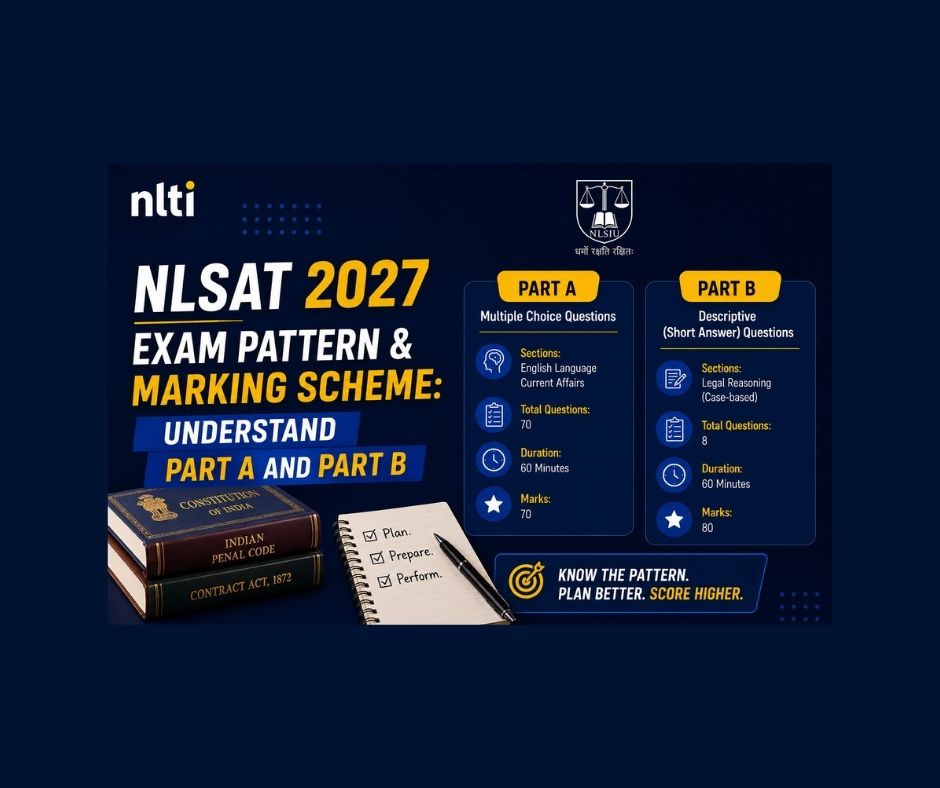
CLAT 2027 Exam Pattern & Marking Scheme Explained
What Proper CLAT Mock Analysis Actually Looks Like
If you are not spending 2–3 hours analysing a full mock, you are wasting it.
Accuracy Analysis
Ask: • Why was this wrong? • Was it a comprehension error? • Was it a logical leap? • Was it fatigue-based?
Time Analysis
Ask: • Where did I lose time? • Which section drained me? • Was it due to confusion or overthinking?
Decision Analysis
Ask: • Why did I attempt this? • Why did I skip that? • Was this a panic attempt?
Emotional Analysis
Ask: • Did I rush after a bad section? • Did I slow down unnecessarily? • Did I panic?
CLAT mock analysis is about behaviour, not content.
How Mocks Improve Accuracy (Not Just Speed)
Speed improves naturally when:
• You understand question patterns
• You recognise traps early
• You stop rereading
• You trust your logic
Trying to increase speed directly increases errors.
That’s why CLAT accuracy in mocks must come first.
High rankers are not the fastest readers. They are the calmest decision-makers.
Mock Score Plateaus: Why They Happen
Most students panic when their mock scores stagnate.
Plateaus happen because:
• You repeat the same mistakes
• You change strategy too often
• You don’t correct root causes
• You confuse familiarity with improvement
Switching CLAT test series rarely fixes plateaus. Behaviour change does.
How to Choose the Right CLAT Test Series
Your CLAT test series must match real exam behaviour.
Check:
• Difficulty alignment
• Explanation depth
• Pattern realism
• Analytics quality
Avoid series that:
• Are too easy
• Inflate scores
• Encourage overattempting
• Focus on speed tricks
Online vs Offline Mocks: Which Is Better?
Both work, but behaviour differs.
Online Mocks
• Closer to real exam format
• Faster navigation
• More realistic fatigue
Offline Mocks
• Better concentration
• No screen strain
• Easier annotation
Most aspirants benefit from online full mocks and offline sectional drills.
When to Stop Taking Mocks
Yes, you should stop.
Stop when:
• Scores fluctuate wildly
• Fatigue rises
• Confidence drops
• You stop learning
In the final 10–12 days, revision beats exposure.
How Mocks Fit Into a Complete CLAT Exam Strategy
Mocks are not the strategy. They shape it.
They help you:
• Identify weak zones
• Calibrate attempts
• Plan section order
• Build confidence
But they cannot replace:
• Reading
• Concept clarity
• Static GK revision
• Error correction
NLTI Note
NLTI structures mock usage through phase-wise planning, heavy analysis emphasis, and decision-calibration systems to prevent blind mock overuse.
Final Word
CLAT mock tests do not improve rank by default.
How you use them matters more than how many you take.
Smart mock usage beats aggressive mock culture. Stability beats bravado. Clarity beats comparison.
FAQs
1. How many CLAT mock tests should I take for 2027?
There is no fixed number, but most serious aspirants benefit from 35–50 full-length mocks combined with sectional practice.
2. Is taking 100 mocks too many for CLAT?
Yes, for most students it is counterproductive. Excessive CLAT mock tests without deep analysis cause fatigue and score instability.
3. When should I start full-length CLAT mocks?
Full-length CLAT mock tests should begin only after basic skills stabilise, usually 4–6 months into preparation.
4. Are sectional mocks more important than full mocks?
Yes, especially early on. CLAT sectional mocks build skills, while full mocks test decision-making under pressure.
5. How often should I analyse a CLAT mock?
Every single time. A mock without analysis is wasted. Proper CLAT mock analysis should take 2–3 hours per test.
6. Can I crack CLAT with fewer mocks?
Yes. Many toppers succeed with fewer mocks but very high-quality analysis and error correction.
7. Do CLAT toppers take more mocks than average students?
Not necessarily. Toppers use CLAT mock tests more intelligently, not more frequently.
8. How do I improve my score using the same CLAT test series?
By tracking error patterns, refining decision logic, and fixing root causes, changing series rarely helps.
9. Should I attempt mocks daily near the exam?
No. Daily mocks close to the exam increase panic and reduce stability. Revision works better.
10. What matters more: mock score or mock behaviour?
Mock behaviour. Your decisions, skips, panic responses, and accuracy trends matter more than raw scores.
Get In Touch
Have questions? We'd love to hear from you. Send us a message and we'll respond as soon as possible.