How to Start CLAT 2027 Preparation from Class 11
Share this article:

Starting CLAT preparation 2027 from Class 11 is not about studying more hours. It is about building the exact skills CLAT rewards: reading endurance, reasoning control, accuracy under negative marking, and decision-making under time pressure. CLAT’s UG paper is passage-driven and uses +1 / -0.25 negative marking, so a rushed, “solve everything” approach typically backfires.
CLAT also showed (most visibly in 2026) that the paper can shift in “section behaviour” even if the broad structure stays similar. So a strong CLAT study plan in Class 11 should be skill-first and pattern-resilient, not trend-chasing.
Below is a Class 11–friendly, execution-focused guide to CLAT preparation 2027 with a realistic CLAT study plan you can actually sustain.
Best CLAT Coaching Online 2026–2027 by NLTI
1) Understand CLAT first (so your CLAT study plan is built on reality)
Before you start CLAT preparation 2027, lock the fundamentals:
Exam style: comprehension + reasoning, not direct “topic questions”
Marking: +1 correct, -0.25 wrong, unattempted = 0
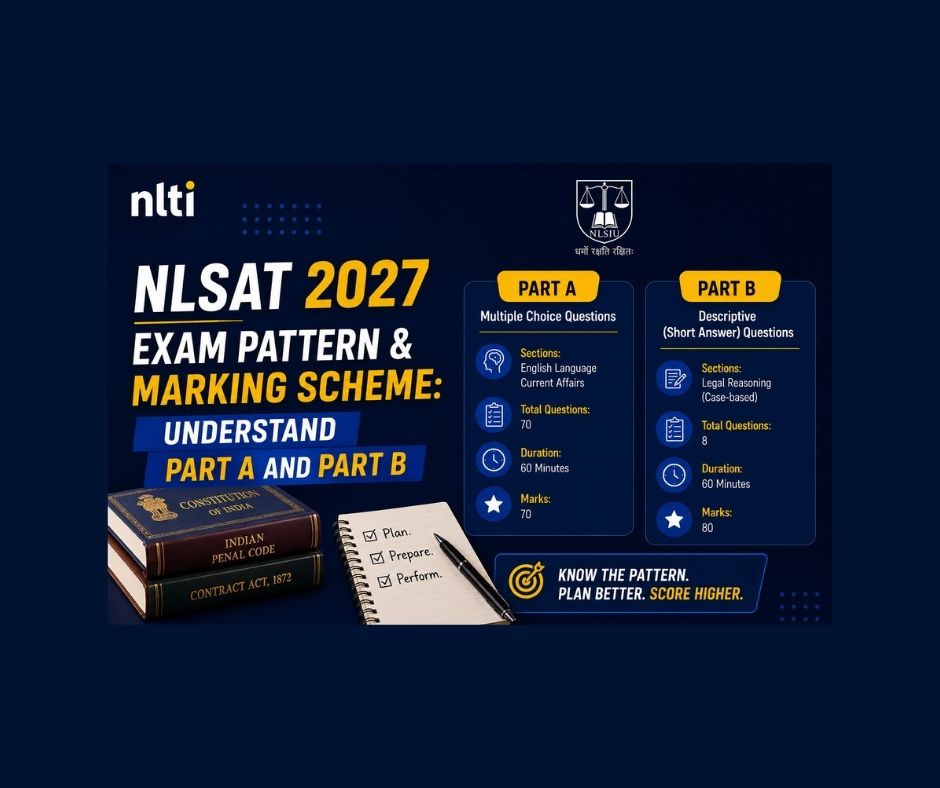
Sections (UG): English, Current Affairs/GK, Legal Reasoning, Logical Reasoning, Quantitative Techniques
Why Class 11 matters: you can build reading speed + reasoning discipline without the Class 12 panic cycle.
If you don’t know how CLAT tests, your CLAT study plan becomes random and your CLAT preparation 2027 becomes inefficient.
Read More: How Online CLAT Courses Transform Exam Preparation
2) What “starting in Class 11” should actually mean
A smart Class 11 start is not:
daily full mocks
memorising bulky GK books
copying topper schedules
A smart Class 11 start is:
building reading stamina and inference accuracy
developing logical + legal application habits
creating a simple GK system (static base + current linkage)
practising quant only at CLAT level (DI + arithmetic basics)
This is the difference between “early start” and “early burnout” in CLAT preparation 2027.
3) The Class 11 CLAT preparation 2027 roadmap (3 phases)
Phase A (Weeks 1–6): Foundation that stops future regret
Your first 6 weeks of CLAT preparation 2027 should stabilise habits.
English / Reading
30–40 minutes reading daily (editorials + long-form)
10 questions alternate days: inference, tone, main idea
Track errors: “misread” vs “misinferred”
Logical
Start with clarity-first analytical basics:
ordering, grouping, conditions, basic deductions
20–25 questions, 3–4 days/week
Focus: “can I explain why the option is right?”
Legal
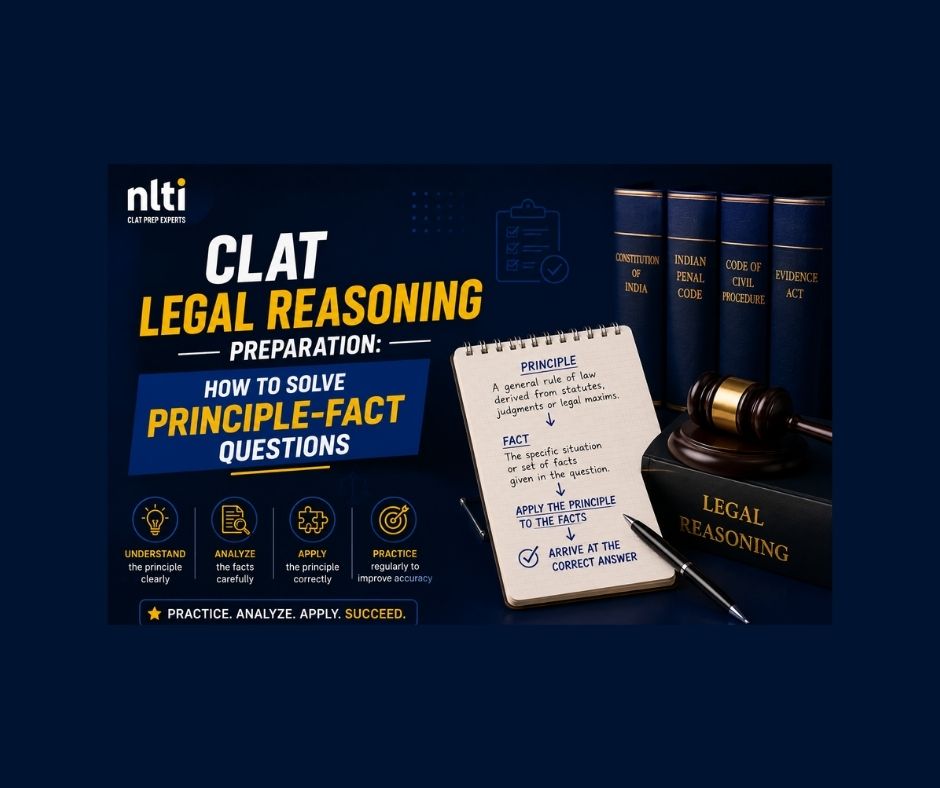
Learn principle–fact method (no law memorisation in Class 11)
1 passage/day, 4 days/week
Focus: exception words, scope, and tight application
Quant
Only CLAT-useful arithmetic + DI reading:
percentage, ratio, average, SI, profit-loss
2 short sets/week, timed lightly
GK
Do not “cover everything.”
Create a weekly system:
2 issues/week (policy/legal/economy/international)
15–20 static facts linked to those issues
This builds a stable CLAT study plan without overload.
Read More: Online vs Offline CLAT 2026 Coaching: Which Is Better?
Phase B (Months 2–6): Skill-building with accuracy control
This is where most students either become sharp—or become busy.
English
Shift from “reading more” to “reading like CLAT”:
each passage: write 1-line main claim
identify author stance in 5–10 seconds
3 RC sets/week (timed) + review mistakes
Logical reasoning CLAT
Increase analytical reasoning exposure (because CLAT can swing)
Weekly mix:
2 analytical sets + 1 critical reasoning mini-set
Review rule: if a set took too long, write why (setup, inference, calculation, confusion)
Legal
Focus on:
scope limits (who/what/when)
exceptions and “unless” clauses
avoiding moral reasoning
Do 3–4 passages/week + 1 weekly “application drill” (explain eliminations)
Quant
DI becomes priority:
tables, bar graphs, mixed data sets
Practise “selection”:
which DI set is worth attempting under time pressure?
GK
Build a two-layer system:
Layer 1: monthly current affairs (issue-based)
Layer 2: static GK base (polity, institutions, geography, basics)
CLAT’s official UG syllabus clearly includes GK/current affairs, and recent cycles have shown GK can behave unpredictably; you need both layers in CLAT preparation 2027.
This phase is where your CLAT study plan must prioritise review, not raw volume.
Read More: CLAT 2026 Guide: Exam Structure, Syllabus & Eligibility
Phase C (Months 7–12): Mock entry without becoming a “mock addict”
Class 11 students should not live on mocks. But avoiding mocks completely is also a mistake.
When to start mocks (Class 11):
Start sectionals first
Start full mocks only after:
you can finish an RC set on time
you have a working legal method
you’ve done basic analytical sets repeatedly
Mock frequency (Class 11):
Month 7–9: 1 full mock every 2 weeks
Month 10–12: 1 full mock per week (if analysis is real)
Non-negotiable mock analysis Your CLAT study plan must include:
accuracy % per section
time-loss diagnosis (where did minutes disappear?)
“wrong because”: misread / logic gap / rushed / guessed
This is how CLAT preparation 2027 becomes score-stable.
4) A weekly CLAT study plan template for Class 11 (illustrative)
Use this as a structure, not a timetable.
If you follow this, your CLAT preparation 2027 stays sustainable, and your CLAT study plan doesn’t collapse in school weeks.
5) What CLAT 2026 should change in your Class 11 approach
CLAT’s official structure remains passage-heavy with negative marking, but paper behaviour can shift. You should treat CLAT 2026 as a warning against preparing for only one “expected” style.
So in CLAT preparation 2027, make these adjustments early:
Train both analytical + critical reasoning (not either/or)
Keep GK systems issue-based + static-backed
Practise quant as DI + decision-making, not “math chapter completion”
Build a “skip logic” habit early (negative marking makes blind attempts expensive)
This is why a Class 11 CLAT study plan should be skill-clustered, not topic-hoarding.
6) Biggest Class 11 mistakes in CLAT preparation 2027 (and the fix)
Mistake: starting full mocks too early
Fix: sectionals first; full mocks only after basic control
Mistake: reading news without retention
Fix: weekly issue-notes + monthly revision loop
Mistake: over-solving logical sets without review
Fix: one-page error log per topic type
Mistake: treating legal like GK
Fix: principle–fact discipline; avoid outside law knowledge
Mistake: building a rigid timetable
Fix: build a weekly structure that survives school pressure
A good CLAT study plan is the one you can repeat for months.
7) About NLTI
NLTI publishes beginner-focused orientation resources and structured practice frameworks that many aspirants use to align their CLAT preparation 2027 with exam behaviour and mock analysis discipline.
FAQs
1. Can I start CLAT preparation 2027 from Class 11 seriously?
Yes. Class 11 is ideal for building reading speed, reasoning habits, and a sustainable CLAT study plan without panic.
2. How many hours should a Class 11 student study daily for CLAT 2027?
Most students do best with 1.5–3 focused hours daily, plus consistency on weekends.
3. Should Class 11 students start full mocks for CLAT 2027?
Not immediately. Start sectionals first; add full mocks only after basics are stable and analysis is consistent.
4. What should be the first step to start CLAT prep in Class 11?
Set a daily reading routine and begin legal + logical basics with an error-log system.
5. Is GK necessary from Class 11 for CLAT 2027?
Yes, but in a system: issue-based current affairs + a small static base, revised monthly.
6. How do I make a CLAT study plan that doesn’t cause burnout?
Use a weekly structure, keep targets small, and prioritise review over volume.
7. Is CLAT preparation 2027 possible with school + exams?
Yes, if your CLAT study plan is weekly (not hourly) and flexible during school assessment weeks.
8. What matters more in Class 11: books or skills?
Skills. The best CLAT preparation 2027 in Class 11 is reading depth, reasoning discipline, and error correction.
Get In Touch
Have questions? We'd love to hear from you. Send us a message and we'll respond as soon as possible.