CLAT 2027 Current Affairs & GK Section Guide
Share this article:

Summary
The CLAT current affairs 2027 section is passage-based and focuses on understanding recent events rather than memorization. Most questions come from the past year, especially from key areas like polity, international relations, economy, and environment. Success depends on clear understanding, regular revision, and consistent practice with PYQs.
Introduction: Why CLAT GK is No Longer “GK”
The biggest misconception about the CLAT current affairs 2027 section is that it is a memory-based subject. That approach worked before 2020. It fails completely today.
CLAT fundamentally changed the GK section into something closer to comprehension. The shift was not cosmetic. It was structural.
Today, the section tests:
Your awareness of events
Your ability to understand context
Your ability to extract information from passages
This means GK for CLAT 2027 is no longer about:
memorizing facts
reading static GK books
Instead, it is about:
reading news like an analyst
connecting events to background knowledge
understanding implications
Students who still prepare using traditional GK methods:
study more
score less
Students who adapt to the new system:
study less
score higher
This blog is built to align your preparation with the actual CLAT pattern, not outdated assumptions.
Best CLAT Coaching Online 2027–2028 by NLTI
CLAT GK Section Syllabus: What It Says vs What It Means
Officially, the CLAT GK section syllabus includes:
Current affairs of national and international importance
Arts and culture
International affairs
Historical events
Government policies
Economics
Environment
This looks broad. But PYQ analysis reveals something very specific.
Actual Syllabus (Decoded from PYQs)
Critical Insight
Static GK is never asked directly anymore.
Instead:
It appears as background
It supports current affairs
Example from PYQ Pattern
Passage: GST reforms
Questions:
What is GST structure?
When was GST implemented?
This shows:
Static GK exists
But only within context
CLAT GK Pattern (2020–2026): Deep Analysis
Pre-2020 vs Post-2020
Before 2020
One-liner questions
Direct facts
Static-heavy
After 2020
Passage-based
Context-driven
Analytical
Structure (Stable Since 2020)
28–32 questions
4–6 passages
400–450 words
What Changed Internally
Earlier
Question → Answer
Now
Passage → Context → Question → Interpretation → Answer
Year-Wise GK Section Analysis (2020–2026)
CLAT 2020
First major shift
Passage-based introduced
Key Observation
Students struggled due to unfamiliar pattern.
CLAT 2021
Easier paper
More direct questions
Insight
Transition phase
CLAT 2022
Balanced difficulty
Increased contextual questions
CLAT 2023
More analytical
Closer options
CLAT 2024
Passage complexity increased
More inference-based GK
CLAT 2025
Easier overall
Mostly direct from passages
CLAT 2026
Moderate to difficult
Strong mix of:
current + static
direct + analytical
Final Trend Conclusion
CLAT is stabilizing at:
Moderate difficulty
Passage-heavy
Context-driven
Read More: CLAT 2027 Mock Planner: How Many Mocks Each Month
Nature of Questions: What CLAT Actually Asks
Type 1: Direct Passage-Based Questions
Answer is directly in passage.
Example
Passage: G20
Question: Which country hosted the summit?
Type 2: Context-Based Questions
Requires:
Prior knowledge
Understanding
Example
Passage: Climate change
Question:
What is COP?
Type 3: Hybrid Questions
Combination of:
Passage + static knowledge
Important Insight
CLAT does NOT test:
rare facts
obscure data
It tests:
important events
meaningful knowledge
Sources of CLAT GK Passages (Critical for Preparation)
Where Passages Come From
PYQ + blog analysis confirms:
The Hindu
Indian Express
Editorials
Government reports
International publications
Implication
If you don’t read:
editorial-style content
You will struggle.
Topic Distribution (Deep Analysis)
1. International Relations (Highest Weightage)
Appears in almost every paper.
Examples
G20
UN
Global conflicts
Why Important
High relevance
Frequent updates
2. Indian Polity
Topics
Bills
Amendments
Supreme Court judgments
PYQ Insight
Questions often ask:
purpose of law
impact
3. Economy
Topics
Budget
GST
Economic reforms
Pattern
Concept + application
4. Environment
Topics
Climate change
COP meetings
Trend
Increasing importance
5. Science & Technology
Topics
Space missions
AI
Pattern
Basic understanding required
6. Sports
Topics
Olympics
Major events
Weightage
Low to moderate
7. Awards & Personalities
Topics
Nobel Prize
National awards
Pattern
Mostly direct
High-Probability Topics for CLAT 202
Based on trends:
Must Cover
International relations
Indian polity
Economy
Environment
Secondary
Science & tech
Awards
Sports
CLAT 2027 Application Fee (Category-wise) Details
Monthly Trend Analysis (Hidden Pattern)
Most Questions Come From
June
July
November
December
Why?
These months:
have major events
have policy announcements
Strategy
Focus on:
last 12 months
especially last 6 months
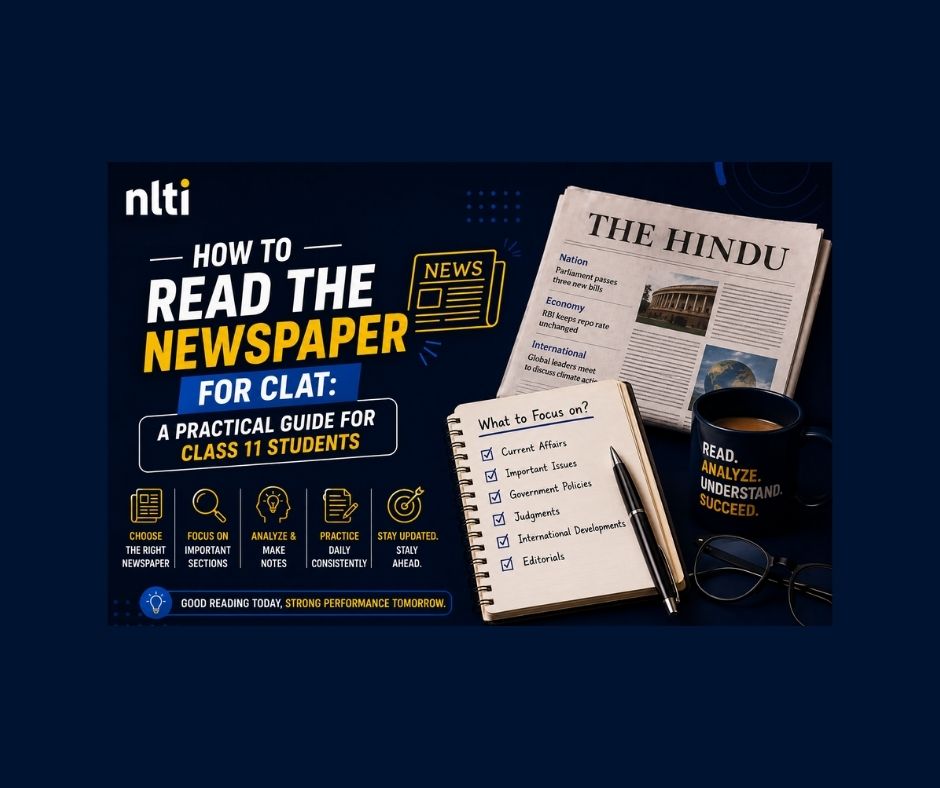
Best NLSAT Books 2026: Recommended Study Resources Guide
How to Prepare Current Affairs for CLAT 2027
Step 1: Select One Source
Avoid multiple sources.
Step 2: Read Editorials
Focus on:
why event matters
impact
Step 3: Make Notes
Short, structured
Step 4: Monthly Revision
Critical
Step 5: Solve PYQs
Non-negotiable
Common Mistakes (Based on Real Student Patterns)
1. Studying Too Many Sources
Leads to confusion
2. Memorizing Without Understanding
Fails in passage-based questions
3. Ignoring PYQs
Biggest mistake
4. No Revision
Leads to forgetting
How to Use PYQs for GK (Advanced Method)
Step 1: Identify Topics
Find repeated themes
Step 2: Analyze Questions
Understand logic
Step 3: Build Topic Notes
Organize information
Step 4: Reattempt
Check retention
Advanced Strategy: How Toppers Approach GK
They Don’t Memorize Everything
They:
focus on important events
They Read Less but Better
Quality > quantity
They Revise More
Retention is key
Read More: CLAT 2027 vs AILET 2027: Which Exam Should You Prioritise
Year-Wise PYQ Topic Mapping (2020–2026)
CLAT 2020 – Transition Year
Major Topics
Constitutional amendments
International organizations
Environmental issues
Pattern Insight
First introduction of passages
Mix of static + current
Takeaway
Students struggled because:
they were still using memory-based prep
CLAT 2021 – Easiest GK Paper
Major Topics
COVID-related developments
Government schemes
International relations
Pattern Insight
Questions mostly direct
Passage contained answers
Takeaway
Reading > memorization
CLAT 2022 – Balanced Paper
Major Topics
Pegasus issue
Farmers’ protests
International agreements
Pattern Insight
Context-based questions increased
Takeaway
Need both:
passage reading
background knowledge
CLAT 2023 – Analytical Shift
Major Topics
Russia–Ukraine conflict
Economic policies
Environment
Pattern Insight
More interpretation
Less direct answers
Takeaway
Students who:
relied only on facts → struggled
CLAT 2024 – Complexity Increase
Major Topics
Supreme Court judgments
International summits
Economic reforms
Pattern Insight
Closer options
Higher ambiguity
Takeaway
Elimination skills became critical
CLAT 2025 – Scoring but Tricky
Major Topics
G20
Global events
Sports
Pattern Insight
Direct but passage-heavy
Takeaway
Accuracy mattered more than knowledge
CLAT 2026 – Most Balanced Benchmark
Major Topics
Women Reservation Bill
Paris Olympics
International relations
Supreme Court rulings
Pattern Insight
Mix of:
direct
analytical
Takeaway
CLAT has stabilized at:
moderate difficulty
high interpretation
Real More: CLAT 2027 Study Timetable: Month-by-Month Plan
Daily–Weekly–Monthly System
Daily Routine (40–50 min)
20 min reading
10 min note-making
10 min revision
Weekly Routine
2–3 passage-based GK tests
Revision of week
Monthly Routine
Full revision
Practice 100+ questions
How to Make Notes for CLAT GK (Correct Method)
Wrong Method
Writing everything
Correct Method
For each topic:
What happened
Why im
Key facts
Background
Example
Topic: G20
Notes:
Members
Purpose
India’s role
Advanced Revision Strategy
1. Spaced Revision
Day 1
Day 7
Day 30
2. Active Recall
Test yourself
Don’t just read
3. Topic-Wise Revision
Revise:
polity together
economy together
CLAT 2027 Eligibility Criteria – Age, Marks & Rules
How to Attempt GK in Exam (Real Strategy)
Step 1: Read Passage First
Don’t jump to questions
Step 2: Mark Key Points
dates
names
events
Step 3: Solve Direct Questions First
Quick scoring
Step 4: Attempt Context Questions Carefully
Avoid guessing
Mistake Mapping (Critical for Improvement)
After Every Mock
Categorize mistakes:
Type 1: Reading Error
Didn’t read properly
Type 2: Knowledge Gap
Didn’t know background
Type 3: Overthinking
Chose wrong option
Fix
Re-read passage
Revise topic
Topper Insights (Based on Analysis)
1. They Don’t Study Everything
They focus on:
important topics
2. They Revise Aggressively
Retention > coverage
3. They Solve PYQs Multiple Times
Pattern recognition improves
Future of CLAT GK (2027–2028)
Expected Trends
More analytical passages
More context-based questions
Slight increase in difficulty
What Will Not Change
Importance of current affairs
Passage-based format
CLAT 2027 Exam Pattern & Marking Scheme Guide
Final Strategy for CLAT 2027 GK
Do This
Study last 12 months
Focus on last 6 months
Revise regularly
Solve PYQs
Avoid This
Memorizing random GK
Using too many sources
Ignoring analysis
Final Conclusion
The CLAT GK section syllabus has evolved into a system that rewards:
awareness
understanding
consistency
To master CLAT current affairs 2027, you must:
read intelligently
revise consistently
practice strategically
Final Takeaway
CLAT GK is not about knowing everything.
It is about knowing:
what matters
why it matters
how it is asked
FAQs
1. What is the syllabus of GK for CLAT 2027?
It includes current affairs, international relations, polity, economy, and environment.
2. How much current affairs should I cover?
At least the last 12 months, with focus on last 6 months.
3. Is static GK important for CLAT 2027?
Yes, but only when linked with current affairs.
4. How many questions come from GK in CLAT?
Around 28–32 questions.
5. What is the best way to prepare GK for CLAT 2027?
Read current affairs, revise monthly, and solve PYQs.
Get In Touch
Have questions? We'd love to hear from you. Send us a message and we'll respond as soon as possible.