CLAT 2026 Analysis for 2027 Aspirants
Share this article:
Summary:
CLAT 2026 exam analysis shows an overall easy to moderate paper with high time pressure.The CLAT 2026 difficulty level was influenced mainly by lengthy passages and a surprising logical reasoning section. Logical reasoning emerged as the toughest and most decisive section in the CLAT 2026 paper review.
Good attempts were around 100–110 questions, with accuracy being more important than attempts. The CLAT 2026 cut off for top NLUs was estimated between 92–98+ marks. For CLAT 2027 aspirants, the key focus should be reading speed, logical reasoning, and accuracy.
Introduction
CLAT is not a static exam. It is pattern-driven, and every year the paper subtly shifts in structure, emphasis, and skill testing. This is why a deep CLAT 2026 exam analysis becomes critical for anyone preparing for CLAT 2027. The exam held on 7 December 2025 was not just another paper; it reflected a clear direction in which the Consortium is moving.
Most aspirants make the mistake of reading a superficial CLAT 2026 paper review and moving on. That approach does not work anymore. What matters is understanding why certain sections felt easy, why some students struggled, and how the paper tested decision-making rather than knowledge.
This blog is not just a review. It is a strategic breakdown. It analyzes the CLAT 2026 difficulty level, expected CLAT 2026 cut off, and section-wise behavior of the paper. More importantly, it translates these insights into actionable strategy for CLAT 2027 aspirants.
Best CLAT Coaching Online 2027–2028 by NLTI
CLAT 2026 Paper Overview
The CLAT 2026 exam analysis begins with understanding the structure of the paper. The exam followed the standard format but with subtle execution differences that impacted performance.
Total Questions: 120
Sections:
English Language
Current Affairs (GK)
Legal Reasoning
Logical Reasoning
Quantitative Techniques
The paper was fully passage-based. There were no standalone questions. Every section required reading, interpretation, and application.
A major takeaway from this CLAT 2026 paper review is that the exam continues to move away from rote learning. The focus is now firmly on comprehension and reasoning.
The paper was reading-heavy, with long passages across all sections. This significantly increased time pressure, even though the CLAT 2026 difficulty level appeared manageable on the surface.
Overall CLAT 2026 Difficulty Level
The overall CLAT 2026 difficulty level was widely considered easy to moderate. However, this label can be misleading if not understood properly.
On paper:
Questions were not conceptually difficult
Most sections were solvable
But in practice:
Time pressure was intense
Logical reasoning was unpredictable
Reading fatigue played a role
This created a split perception among students:
Some found the paper easy
Others found it moderately difficult
The key factors influencing the CLAT 2026 difficulty level were:
1. Length of Paper
The passages were lengthy, increasing reading time.
2. Time Management Pressure
Even strong students struggled to complete the paper comfortably.
3. Logical Reasoning Shift
The unexpected change in logical reasoning raised the difficulty.
Therefore, the CLAT 2026 exam analysis shows that the paper was not difficult because of content, but because of execution.
CLAT 2027 Eligibility Criteria – Age, Marks & Rules
Section-Wise CLAT 2026 Paper Analysis
English Language
The English section in the CLAT 2026 paper review was entirely passage-based and aligned with recent trends.
Key Features
4–5 reading comprehension passages
Moderate difficulty
Focus on interpretation
Question Types
Inference
Tone
Vocabulary in context
Central idea
The CLAT 2026 difficulty level for English was manageable. However, students with weaker reading speed struggled.
Key Insight
Grammar-based preparation had minimal relevance. The section rewarded:
Reading speed
Comprehension accuracy
GK & Current Affairs
The GK section followed the passage-based model.
Key Observations
Mostly predictable topics
Current affairs dominated
Static GK almost absent
The CLAT 2026 exam analysis shows that GK was less about memory and more about understanding.
Insight
Students who regularly read newspapers found this section easier.
Legal Reasoning
The legal section was one of the easier sections in the CLAT 2026 paper review.
Key Features
Passage-based
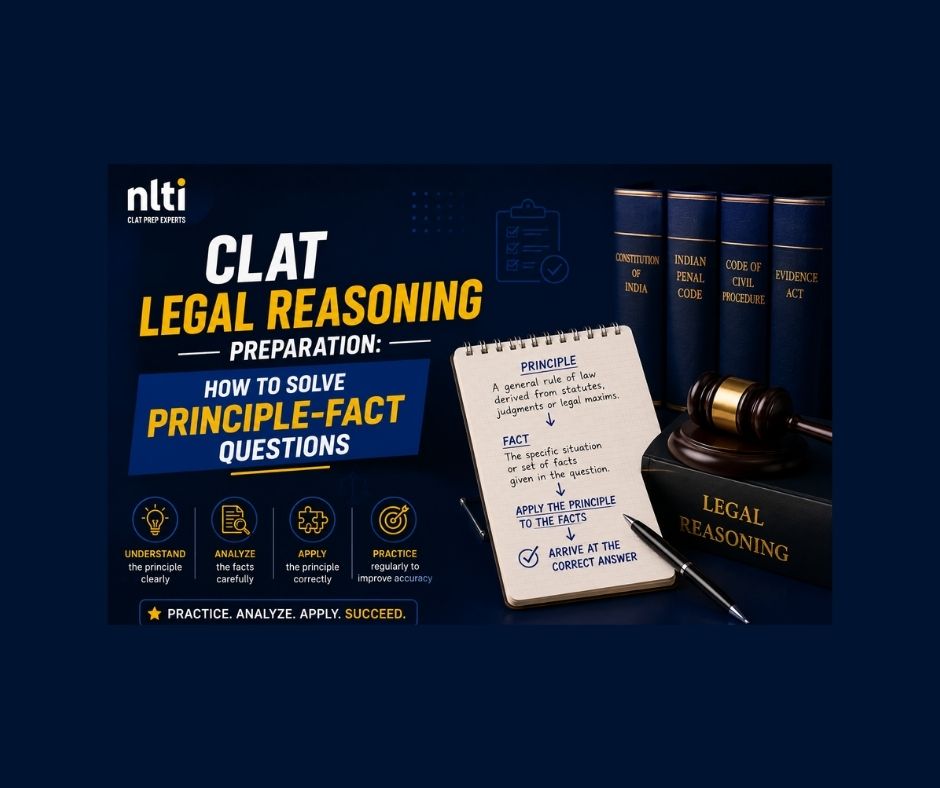
Principle + application format
Difficulty
Easy to moderate
Important Insight
Prior legal knowledge was not required. What mattered was:
Reading carefully
Applying principles logically
This confirms the trend seen in previous CLAT 2026 exam analysis discussions.
Logical Reasoning
This was the most surprising section.
Major Change
No traditional critical reasoning
Entirely analytical reasoning
Topics
Puzzles
Blood relations
Case-based questions
Difficulty
Moderate to difficult
This section became the biggest differentiator. Many students lost time here, which affected overall performance.
Insight
The CLAT 2026 difficulty level increased mainly because of this section.
Quantitative Techniques
The quant section remained consistent with previous patterns.
Key Features
Data interpretation
Basic calculations
Difficulty
Easy to moderate
Challenge
Time-consuming
Students who practiced DI regularly performed well.
CLAT 2026 Paper Review (Student + Expert Perspective)
The CLAT 2026 paper review reveals mixed reactions.
Student Perspective
Easy questions but lengthy
Logical reasoning was unexpected
Expert Perspective
Balanced paper
Fair difficulty level
The variation in responses highlights an important point: The paper rewarded strategy more than knowledge.
CLAT 2027 Application Fee (Category-wise) Details
CLAT 2026 Good Attempts & Score Analysis
Based on multiple CLAT 2026 exam analysis reports:
Good attempts: 100–110+
However, attempts alone did not determine success.
Key Insight
Accuracy played a decisive role.
Students with:
100 attempts + high accuracy performed better
than
110 attempts + low accuracy
CLAT 2026 Expected Cut-Off
The expected CLAT 2026 cut off for top NLUs is estimated around:
92–98+ marks
Factors Affecting Cut-Off
Paper difficulty
Competition level
Number of candidates
Since the CLAT 2026 difficulty level was moderate, the cut-off is expected to be on the higher side.
Key Changes Observed in CLAT 2026
The CLAT 2026 exam analysis highlights important shifts:
Logical reasoning became analytical
GK became more comprehension-based
Legal remained application-focused
Trend
CLAT is moving toward:
Skill-based evaluation
Reduced reliance on memory
Comparison with CLAT 2025 & 2024
CLAT 2024: Difficult
CLAT 2025: Easier
CLAT 2026: Balanced
This progression shows that CLAT is stabilizing but still testing adaptability.
Best NLSAT Books 2026: Recommended Study Resources Guide
What CLAT 2026 Teaches CLAT 2027 Aspirants
1. Reading is the Core Skill
Every section depends on reading ability.
2. Logical Reasoning is Unpredictable
Students must prepare for multiple formats.
3. GK is Passage-Based
Understanding matters more than memorization.
4. Accuracy is More Important than Attempts
Negative marking impacts rank significantly.
5. Time Management is Critical
Speed without accuracy is useless.
Common Mistakes Students Made
Ignoring logical reasoning changes
Over-attempting questions
Poor time allocation
These mistakes reduced scores even for well-prepared students.
Strategy for CLAT 2027 Based on CLAT 2026
Reading Strategy
Daily reading practice
Focus on comprehension
Mock Strategy
Attempt 2–3 mocks weekly
Analyze deeply
Section Priority
Strengthen logical reasoning
Maintain balance
Revision System
Error logs
Reattempt wrong questions
Read More: CLAT 2027 Mock Planner: How Many Mocks Each Month
Conclusion
The CLAT 2026 exam analysis shows that the exam is evolving toward a skill-based format. The CLAT 2026 difficulty level was moderate, but the paper required strategy and adaptability.
For CLAT 2027 aspirants, the message is clear:
Focus on reading
Practice logical reasoning
Prioritize accuracy
Success will depend not on how much you study, but how effectively you apply your preparation.
FAQs
1. What was CLAT 2026 difficulty level?
Overall easy to moderate with time pressure.
2. What is expected CLAT 2026 cut off?
Around 92–98+ for top NLUs.
3. Which section was toughest?
Logical reasoning.
4. What were good attempts?
Around 100–110+.
Get In Touch
Have questions? We'd love to hear from you. Send us a message and we'll respond as soon as possible.