CLAT 2027 for Class 11 Students: Complete Guide
Share this article:
Summary
If you are in Class 11 and aiming for CLAT 2027, starting now gives you a decisive advantage. The exam is no longer about memorization but about comprehension, reasoning, and consistency.
A 2-year foundation allows you to build reading skills, cover current affairs properly, and attempt enough mocks to reach exam-level accuracy. You do not need 6–8 hours daily. Even 1.5–2 focused hours with the right strategy is enough in Class 11.
Best CLAT Coaching Online 2027–2028 by NLTI
Why CLAT 2027 Preparation in Class 11 Matters
CLAT has evolved into a skill-based exam where understanding passages, analyzing arguments, and applying logic matter far more than rote learning. With over 70,000 aspirants competing for limited seats in NLUs, the margin for error has reduced significantly.
This is where CLAT preparation class 11 becomes critical.
Starting in Class 11 gives you roughly 18–24 months, which is not just extra time, but better time. You are not under board pressure yet. You can experiment, make mistakes, and improve gradually without panic.
More importantly, CLAT rewards reading maturity, not last-minute effort. That maturity cannot be built in 3–4 months.
When to Start CLAT 2027 Preparation
Is Class 11 the Right Time?
Yes. The ideal time to start CLAT 2027 prep is immediately after Class 10 or at the beginning of Class 11.
Many students delay preparation thinking Class 12 is sufficient. That assumption fails because CLAT is not syllabus-heavy; it is skill-heavy.
Why You Should Not Wait Till Class 12
Class 12 brings board pressure
CLAT requires long-term reading habit
Mock performance needs gradual improvement
Current affairs require continuous tracking
If you start late, you will constantly feel rushed. If you start early, you control the pace.
That is the core advantage of a CLAT 2 year foundation.
Why CLAT Preparation from Class 11 Gives an Edge
Real Advantages of a 2-Year Foundation
1. Time to Build Reading Skills
CLAT passages are lengthy, layered, and often abstract. You are expected to read editorials, legal texts, and opinion pieces comfortably.
Reading is not a subject. It is a habit.
A student starting in Class 11 has time to:
Improve speed
Understand tone and inference
Handle dense passages
Late starters struggle here the most.
2. Conceptual Clarity Across Sections
Legal reasoning and logical reasoning are not about knowledge. They are about pattern recognition and application.
If you start early:
You understand principles better
You reduce silly mistakes
You improve accuracy over time
3. More Mock Tests
Mock tests are where ranks are made.
Early starters typically attempt 40–60 mocks, while late starters barely manage 15–20.
More mocks mean:
Better time management
Stronger accuracy
Familiarity with exam pressure
4. Stress-Free Preparation
In Class 11:
No board pressure
More flexible schedule
Lower academic stress
You can prepare without burnout.
5. Better GK Coverage
Current affairs cannot be memorized overnight.
With early preparation:
You cover topics month-wise
You revise regularly
You understand background, not just headlines
6. Consistency Advantage
CLAT rewards consistency more than intensity.
Studying 2 hours daily for 18 months is far more effective than 8 hours daily for 3 months.
CLAT 2027 Eligibility Criteria – Age, Marks & Rules
What is CLAT 2-Year Foundation (And How It Works)
Understanding the CLAT 2-Year Preparation Model
Year 1 (Class 11) → FOUNDATION
Focus areas:
Reading habit
Vocabulary
Basic reasoning
Current affairs
This phase is not about finishing syllabus. It is about building capability.
Year 2 (Class 12) → PERFORMANCE
Focus shifts to:
Full-length mocks
Time management
Accuracy improvement
Revision
Students who skip foundation struggle here.
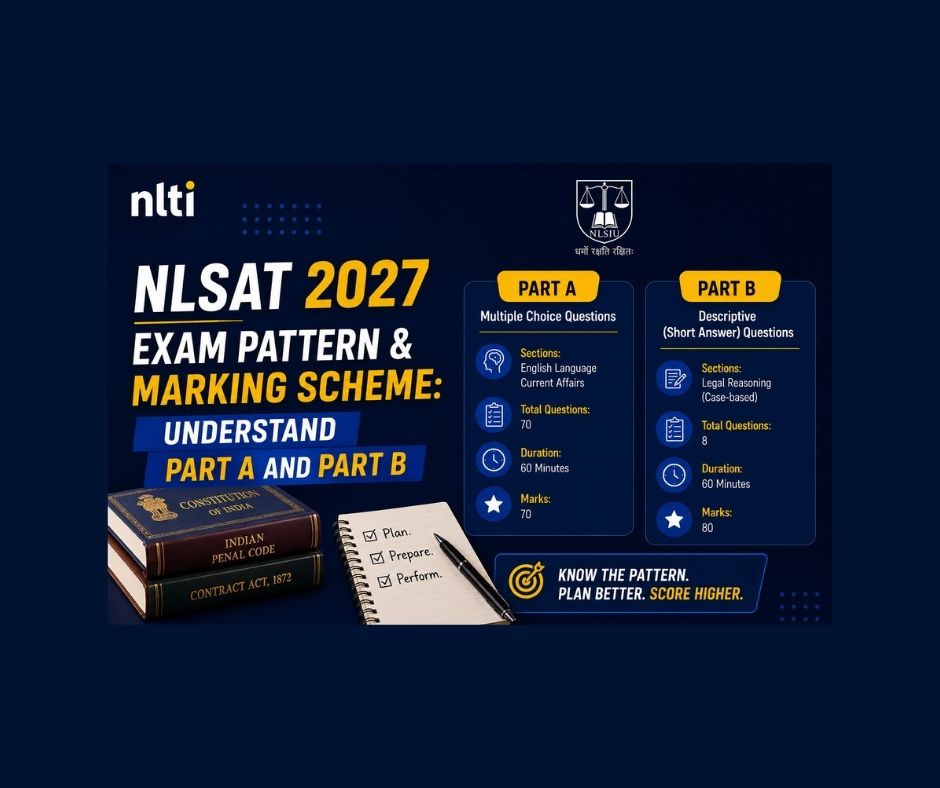
CLAT 2027 Exam Structure
Understanding the exam is essential before building your CLAT class 11 strategy.
Sections and Weightage
English Language – 20%
Current Affairs (GK) – 25%
Legal Reasoning – 25%
Logical Reasoning – 20%
Quantitative Techniques – 10%
Key Insight
The entire paper is passage-based.
This means:
Reading is central
Interpretation matters
Speed + accuracy both matter
Four out of five sections depend heavily on comprehension.
CLAT Class 11 Strategy (Section-Wise Plan)
English Language
Focus on:
Daily reading (editorials)
RC practice
Do not memorize vocabulary lists blindly. Build vocabulary through context.
Current Affairs
This is the most ignored section by beginners.
Strategy:
Read daily
Make short notes
Revise monthly
Focus on:
Background
Impact
Legal relevance
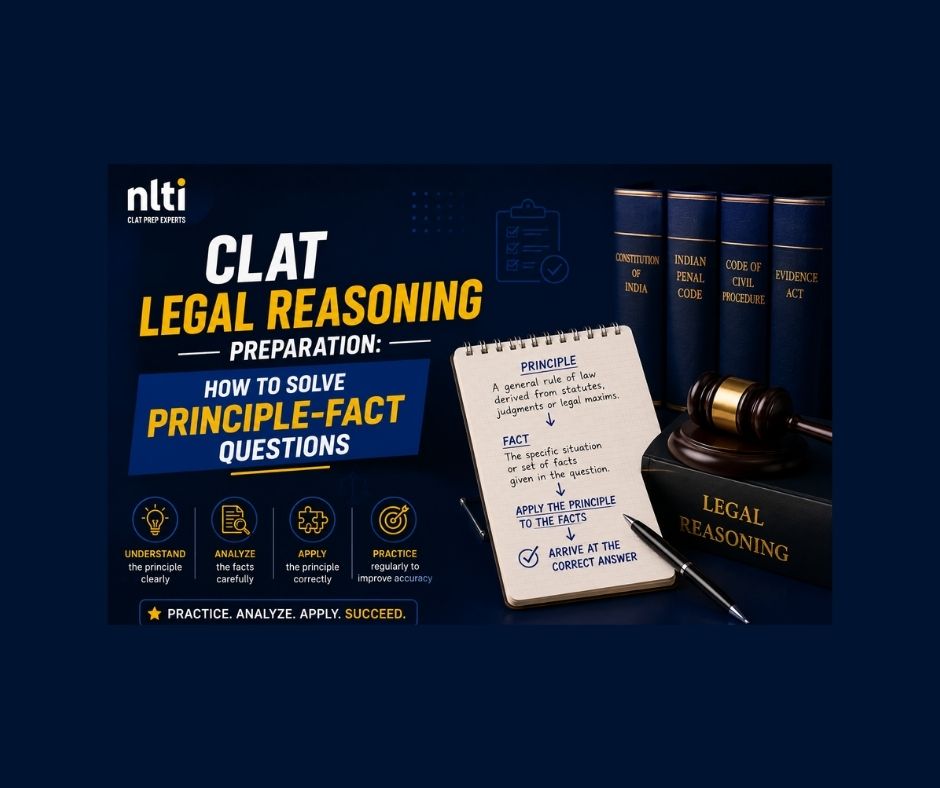
Legal Reasoning
Big misconception: You need to study law.
Reality: You need to apply principles.
Focus on:
Understanding legal principles
Practicing passage-based questions
Logical Reasoning
This section tests thinking, not formulas.
Focus on:
Arguments
Assumptions
Inference
Practice consistently. Improvement here is gradual.
Quantitative Techniques
You only need Class 10 level maths.
Focus on:
Percentages
Ratios
Data interpretation
Keep it simple and consistent.
Read More: CLAT 2027 Mock Planner: How Many Mocks Each Month
Daily Routine for Class 11 Students
How Many Hours Should You Study?
You do not need extreme study hours.
1.5–2 hours daily is enough in Class 11 if used properly.
Ideal Daily Split
40 minutes – Reading
30 minutes – Practice questions
20 minutes – Current affairs
20 minutes – Revision
Consistency matters more than duration.
Month-Wise CLAT 2027 Plan (Class 11)
Phase 1 (0–3 Months)
Build reading habit
Understand exam pattern
Start basic practice
Phase 2 (3–8 Months)
Section-wise practice
Start making GK notes
Improve accuracy
Phase 3 (8–12 Months)
Attempt sectional tests
Identify weak areas
Improve speed
Role of Mock Tests in Class 11
Most students delay mocks. That is a mistake.
Start with:
Sectional tests first
Full mocks later
Key Rule
Mock analysis is more important than mock attempt.
After every mock:
Identify mistakes
Understand patterns
Improve strategy
Biggest Mistakes Class 11 Students Make
1. Starting without a clear strategy
2. Ignoring current affairs
3. Not reading daily
4. Studying too much initially and burning out
5. Not analyzing mocks
Avoid these, and your preparation becomes significantly stronger.
CLAT 2027 Application Fee (Category-wise) Details
Can You Crack CLAT Without Coaching?
Yes, it is possible.
But coaching provides:
Structured guidance
Regular mocks
Direction
Self-study works if you are disciplined. Coaching helps if you need structure.
Neither guarantees success. Strategy does.
How to Balance School and CLAT Preparation
CLAT is not memory-based, so school and CLAT can complement each other.
School helps in:
Reading comprehension
Writing discipline
Balanced Strategy
Weekdays → light preparation
Weekends → mocks + revision
Do not sacrifice school completely.
How Toppers Prepare in Class 11
Common patterns among toppers:
Daily reading habit
Early exposure to mocks
Strong consistency
Clear strategy
They do not rely on last-minute preparation.
Final Strategy for CLAT 2027 Aspirants
If you remember only this:
Start early
Focus on skills, not syllabus
Stay consistent
Practice regularly
That is enough to build a strong foundation.
Best NLSAT Books 2026: Recommended Study Resources Guide
Conclusion
CLAT is not about memorizing legal concepts. It is about understanding, analyzing, and thinking clearly under pressure.
Students who start in Class 11 are not smarter. They are simply better prepared.
If you begin now with a structured CLAT class 11 strategy, you are not just preparing for an exam. You are building the thinking pattern required to succeed in law school and beyond.
FAQs
1. When should I start CLAT 2027 preparation?
Ideally in Class 11 or immediately after Class 10 to get a full 2-year preparation window.
2. Is Class 11 enough for CLAT preparation?
Class 11 is the best time to build foundation. Final preparation continues in Class 12.
3. How many hours should I study daily for CLAT in Class 11?
1.5–2 hours daily is sufficient if you maintain consistency.
4. Should I join coaching in Class 11 for CLAT 2027?
Coaching in Class 11 can be useful for structure, regular mocks, and guidance. However, it is not mandatory. If you can follow a disciplined CLAT class 11 strategy, maintain consistency, and access quality mocks, self-study is sufficient.
5. How do I start CLAT preparation in Class 11 from zero?
Start with building a daily reading habit, understanding the exam pattern, and practicing basic questions from English and Logical Reasoning. Gradually add Current Affairs and Legal Reasoning. Focus on consistency rather than covering everything at once.
6. Is 2-year preparation necessary for CLAT 2027?
It is not strictly necessary, but a CLAT 2 year foundation gives a strong advantage. It allows time for reading improvement, multiple mock tests, and better retention of current affairs, which is difficult to achieve in short-term preparation.
7. Which section should I focus on first in Class 11 CLAT preparation?
Start with English and Logical Reasoning, as they build the core skills required for most of the paper. Alongside, begin Current Affairs early. Legal Reasoning and Quant can be added gradually once your reading and comprehension improve.
Get In Touch
Have questions? We'd love to hear from you. Send us a message and we'll respond as soon as possible.