CLAT 2027 Preparation Strategy for Beginners Guide
Share this article:
Summary:
CLAT 2027 preparation requires a structured, skill-based approach focused on reading, mock analysis, and consistency. A strong clat beginner strategy should prioritize passage-based practice, current affairs, and accuracy rather than rote learning.
An effective clat study plan includes daily reading, sectional tests, mock analysis, and revision cycles. Beginners should avoid overcollecting resources and start mocks early to build exam temperament. Platforms with mentorship, analytics, and structured guidance help simplify CLAT 2027 preparation significantly.
Introduction
Starting your CLAT 2027 preparation as a beginner can feel overwhelming. Most students enter the preparation phase with little clarity about the exam pattern, study resources, mock strategy, or even how law entrance preparation actually works. Unlike school exams, CLAT is not based on memorisation or textbook learning. It is an aptitude and reasoning-based examination that tests comprehension, interpretation, decision-making, and analytical ability.
This is why many beginners struggle initially. They study for long hours, collect multiple books, and watch endless strategy videos, yet fail to improve scores. The issue is rarely hard work. The issue is lack of direction.
A proper clat beginner strategy must focus on:
Reading ability
Mock analysis
Consistency
Time management
Interpretation skills
The current CLAT pattern heavily rewards students who can process passages quickly and think critically under pressure. This means your clat 2027 preparation should be skill-oriented rather than memory-oriented.
This guide is designed as a complete roadmap for beginners. It covers:
Updated CLAT pattern and syllabus
Section-wise preparation strategy
Daily and monthly study plans
Mock test systems
Resource recommendations
Beginner mistakes to avoid
Best coaching ecosystems for structured preparation
If followed properly, this blog can become your complete clat study plan for the next year.
Best CLAT Coaching Online 2027–2028 by NLTI
Understanding CLAT 2027 Before Starting Preparation
Before creating a clat study plan, beginners must understand what the exam actually tests.
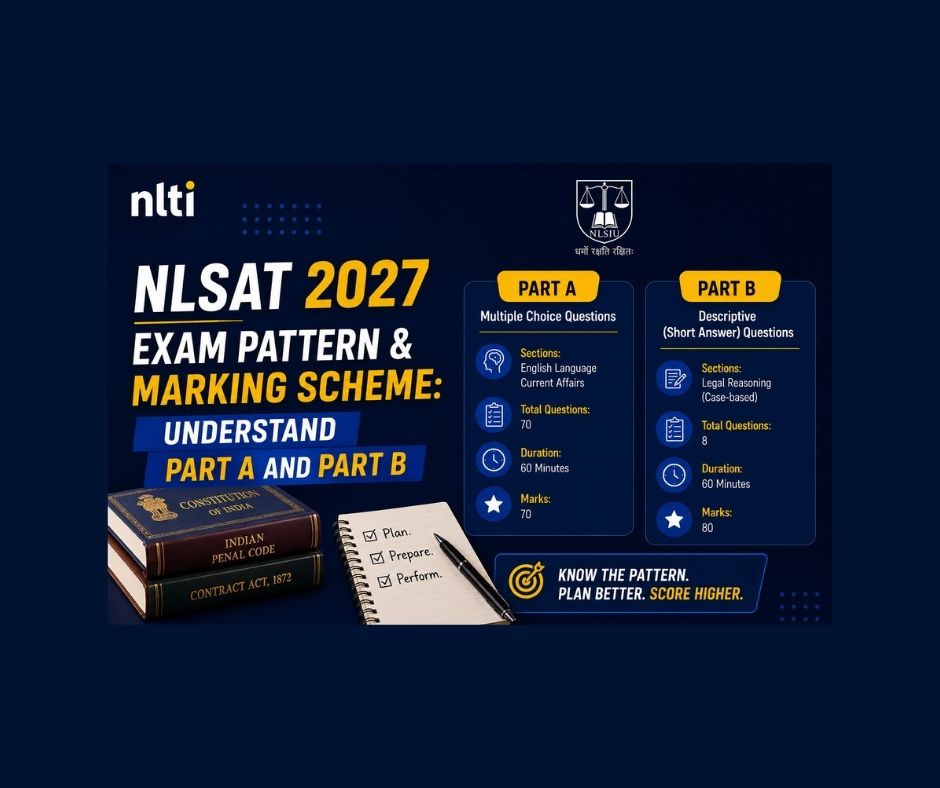
According to the official Consortium structure, CLAT UG is:
A 2-hour exam
120 MCQs
Passage-based format
Negative marking of 0.25 for wrong answers
The exam consists of five sections:
The most important thing beginners must understand is that CLAT has become highly reading-intensive. Nearly every section is passage-based. Even GK and Quant involve comprehension.
This changes the entire clat beginner strategy.
Students who rely only on:
Rote learning
Static notes
Formula memorisation
usually struggle.
Students who:
Read consistently
Analyse mocks
Build interpretation skills
perform better.
The Consortium itself states that CLAT is designed to evaluate aptitude and reasoning abilities necessary for legal education.
This means:
Reading speed determines attempts
Interpretation determines accuracy
Mock analysis determines improvement
A beginner who understands this early gains a major advantage.
Biggest Mistakes Beginners Make in CLAT Preparation
One of the most important parts of a successful clat 2027 preparation journey is avoiding common beginner mistakes.
1. Treating CLAT Like Board Exams
Many beginners study CLAT the same way they study school subjects:
Memorising notes
Reading theory repeatedly
Avoiding timed practice
This approach fails because CLAT is skill-based.
2. Ignoring Reading Practice
The current pattern is heavily comprehension-oriented. Students who do not read:
Editorials
Opinion pieces
Long-form articles
struggle with:
Time management
Accuracy
Mental stamina
This is why reading is the foundation of every effective clat beginner strategy.
3. Starting Mocks Too Late
Many students wait until syllabus completion before attempting mocks.
This is a major mistake.
Mocks are not evaluation tools only. They are learning tools.
You should ideally start basic mocks within:
2–3 months of preparation
4. Overcollecting Study Materials
A common beginner problem:
10 books for one section
20 PDFs
Multiple coaching notes
This creates confusion and inconsistency.
A smart clat study plan uses:
Limited resources
Maximum revision
5. Ignoring Mock Analysis
Students often attempt mocks and immediately move to the next one.
Improvement does not come from mock attempts.
It comes from:
Error analysis
Time analysis
Strategy correction
6. Neglecting Quantitative Techniques
Because Quant has lower weightage, many beginners ignore it.
But Quant often becomes the deciding factor between:
AIR 500
AIR 50
Since the section is relatively smaller, mastering it gives a major advantage.
Read More: CLAT 2027 vs AILET 2027: Which Exam Should You Prioritise
Ideal Timeline for CLAT 2027 Preparation
A realistic clat study plan should be divided into phases.
Phase 1: Foundation Stage (First 4 Months)
Goals
Build reading habits
Understand exam pattern
Learn basics of each section
Daily Targets
1 editorial daily
2 RC passages
Basic legal reasoning concepts
Vocabulary building
Focus Areas
Reading comprehension
Newspaper analysis
Arithmetic basics
Current affairs habit formation
This phase determines long-term performance.
Phase 2: Skill Building Stage (Next 4 Months)
Now the focus shifts from learning to application.
Goals
Timed sectional practice
Logical reasoning strengthening
Legal principle application
Daily System
Sectional tests
Timed RCs
Weekly mocks
This is where your actual clat beginner strategy starts becoming result-oriented.
Phase 3: Mock & Analysis Stage (Final Months)
This is the most critical phase.
Focus
Full-length mocks
Revision cycles
Accuracy optimization
Students should attempt:
2–3 mocks weekly initially
4–5 mocks weekly near exam
The emphasis should be:
Analysis > attempts
Real More: CLAT 2027 Study Timetable: Month-by-Month Plan
Section-Wise CLAT 2027 Preparation Strategy
A. English Language Strategy
English in CLAT is no longer grammar-heavy.
The section now focuses on:
Reading comprehension
Inference
Vocabulary in context
Tone and argument analysis
Best Beginner Strategy
Read editorials daily
Practice RCs consistently
Focus on interpretation
Recommended Sources
The Hindu
Indian Express
Aeon Essays
The Guardian Opinion
Important Insight
Vocabulary should not be memorized separately excessively. Context-based learning works better.
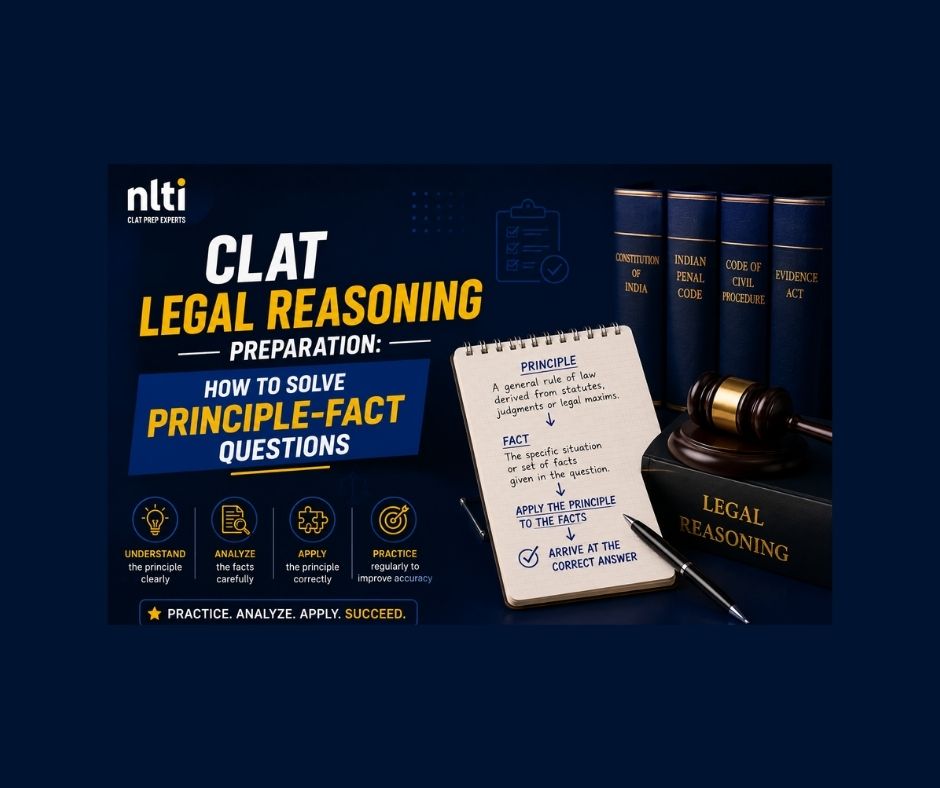
B. Legal Reasoning Strategy
Legal reasoning carries one of the highest weightages in CLAT.
Questions test:
Principle application
Interpretation
Logical legal thinking
Beginner Focus
Constitutional basics
Rights and duties
Landmark judgments
Current legal developments
Key Skill
You are not expected to know law deeply.
You are expected to:
Read principles carefully
Apply them logically
This section improves dramatically through:
PYQs
Mock analysis
Repeated exposure
C. Current Affairs + GK Strategy
This is the most unpredictable section for beginners.
The mistake most students make:
Collecting too many sources
Ideal System
1 newspaper daily
1 monthly CA magazine
Weekly revision
Focus Areas
Supreme Court judgments
International relations
Government schemes
Sports and awards
Environment
Best Sources
Newspaper editorials
Monthly compilations
Mock-based CA revision
D. Logical Reasoning Strategy
Logical reasoning in CLAT focuses on:
Critical reasoning
Assumptions
Inference
Arguments
The section rewards:
Calm thinking
Structured interpretation
Preparation Method
Daily reasoning sets
Timed practice
Error logs
E. Quantitative Techniques Strategy
Quantitative Techniques are entirely passage and DI-based.
Important topics:
Percentages
Ratios
Averages
Data interpretation
Basic algebra
The biggest beginner mistake is avoiding Quant due to fear.
In reality:
CLAT Quant is class 10-level
Consistency matters more than difficulty
Best Books & Resources for CLAT 2027 Beginners
Important Rule
Do not overload resources.
One good source revised repeatedly is better than ten incomplete books.
Read More: CLAT 2027 Mock Planner: How Many Mocks Each Month
Why Mock Tests are the Most Important Part of CLAT Prep
Mock tests simulate:
Pressure
Time management
Reading fatigue
But the real value lies in:
Mock analysis
Students improve through:
Reviewing mistakes
Tracking weak areas
Correcting strategy
A proper mock system should track:
Accuracy
Attempts
Time spent per section
NLTI’s Beginner-Friendly CLAT 2027 Preparation System
Why NLTI Works Well for Beginners
Many beginners fail because preparation becomes overwhelming.
NLTI simplifies this through:
Structured preparation
Guided mentorship
Reading-focused learning
NLTI Study Structure
NLTI provides:
Live classes
Recorded lectures
Daily assignments
Weekly targets
This creates consistency.
Mock Ecosystem
The NLTI mock ecosystem focuses heavily on:
Mock analysis
Performance tracking
AI-based insights
This helps students understand:
Why mistakes happen
How to improve attempts
Mentorship System
NLTI includes:
1:1 mentorship
Study buddy groups
Accountability systems
This helps beginners avoid confusion.
Doubt-Clearing Support
Daily doubt solving and weekly doubt sessions ensure:
No backlog
Continuous clarity
PYQ + Reading Training
NLTI strongly emphasizes:
Passage-based learning
CLAT-style interpretation
This matches the actual exam trend.
Results & Rankers
NLTI has consistently produced:
Top AIR ranks
Multiple NLU selections
This validates its structured beginner-focused approach.
What CLAT 2026 Taught Us: Lessons for CLAT 2027 Aspirants
Beginner-Friendly Daily CLAT Study Plan
For Class 11 Students
2–3 hours daily
Reading focus
Basic sectionals
For Class 12 Students
4–5 hours daily
Mocks weekly
CA revision
For Droppers
6–8 hours structured preparation
Daily mocks/sectionals
Deep analysis cycles
Common Beginner Questions Answered
Is 1 year enough for CLAT 2027?
Yes, if preparation is consistent.
Can average students crack CLAT?
Absolutely. CLAT rewards skill-building, not intelligence labels.
Is coaching necessary?
Not mandatory, but structured guidance helps.
How many mocks should beginners attempt?
Start with 1 weekly, gradually increase.
Future of CLAT Preparation
The future trend is clear:
Reading-heavy papers
AI-based mock analytics
Passage-centric evaluation
Students who build:
Reading stamina
Analytical ability
will dominate future CLAT papers.
Real More: CLAT 2027 Study Timetable: Month-by-Month Plan
Conclusion
CLAT is not an impossible exam. It is a learnable skill-based examination.
A successful clat 2027 preparation journey depends on:
Reading consistently
Attempting mocks
Analysing mistakes
Following a structured clat study plan
The best clat beginner strategy is not studying endlessly. It is studying intelligently and consistently.
Platforms like NLTI stand out because they provide:
Structured systems
Mentorship
Reading-focused training
Mock analytics
For beginners, this reduces confusion and creates a clear preparation roadmap.
FAQs
1. When should I start CLAT 2027 preparation?
The ideal time to start CLAT 2027 preparation is in Class 11 or at least 12–15 months before the exam. Early preparation helps build reading habits and consistency gradually.
2. How many hours should beginners study daily for CLAT?
A beginner should initially study 2–4 focused hours daily. As the exam approaches, the clat study plan should become more mock and analysis-oriented.
3. Which newspaper is best for CLAT beginners?
For an effective clat beginner strategy, newspapers like The Hindu and Indian Express are considered most useful for reading comprehension and current affairs.
4. Should beginners solve CLAT previous year papers?
Yes. Solving PYQs is essential for understanding the exam pattern, passage style, and question framing during CLAT 2027 preparation.
5. What is the biggest mistake beginners make in CLAT prep?
The biggest mistake is focusing only on theory instead of reading practice, mock analysis, and consistency. A good clat study plan prioritizes skill-building over rote learning.
Get In Touch
Have questions? We'd love to hear from you. Send us a message and we'll respond as soon as possible.