NLSAT 2027 Logical Reasoning Syllabus & Important Topics
Share this article:
If There Is One Section That Can Change Your NLSAT Rank, It Is Logical Reasoning
Every year, students preparing for NLSAT spend hours reading current affairs, improving comprehension, and practicing legal reasoning. However, one section consistently separates top performers from the rest; NLSAT Logical Reasoning.
The NLSAT 2026 paper once again highlighted the importance of reasoning-based questions. Students who could identify assumptions, draw inferences, evaluate arguments, and analyse complex passages performed significantly better than those who relied only on factual knowledge.
Unlike traditional aptitude tests, analytical reasoning in NLSAT is deeply integrated with reading and comprehension. The exam does not merely test whether you can solve logical puzzles. It tests whether you can think critically, identify flaws in arguments, interpret information, and arrive at reasoned conclusions.
If you are preparing for NLSAT 2027, understanding the reasoning syllabus for NLSAT, identifying high-weightage topics, and developing a structured preparation strategy can dramatically improve your score.
In this guide, we break down the most important logical reasoning topics for NLSAT 2027, explain how they are tested, and provide a practical roadmap for preparation.
Check Out NLSAT Coaching and Mentorship by NLTI
Understanding NLSAT Logical Reasoning
Logical Reasoning is one of the most important components of Part A of the NLSAT examination.
Rather than testing mathematical aptitude or formula-based reasoning, NLSAT focuses on:
· Critical reasoning
· Analytical reasoning
· Argument evaluation
· Decision making
· Inference-based thinking
Most reasoning questions are passage-driven and require students to engage deeply with the information presented.
This is why many students find NLSAT logical reasoning different from reasoning sections in other competitive examinations.
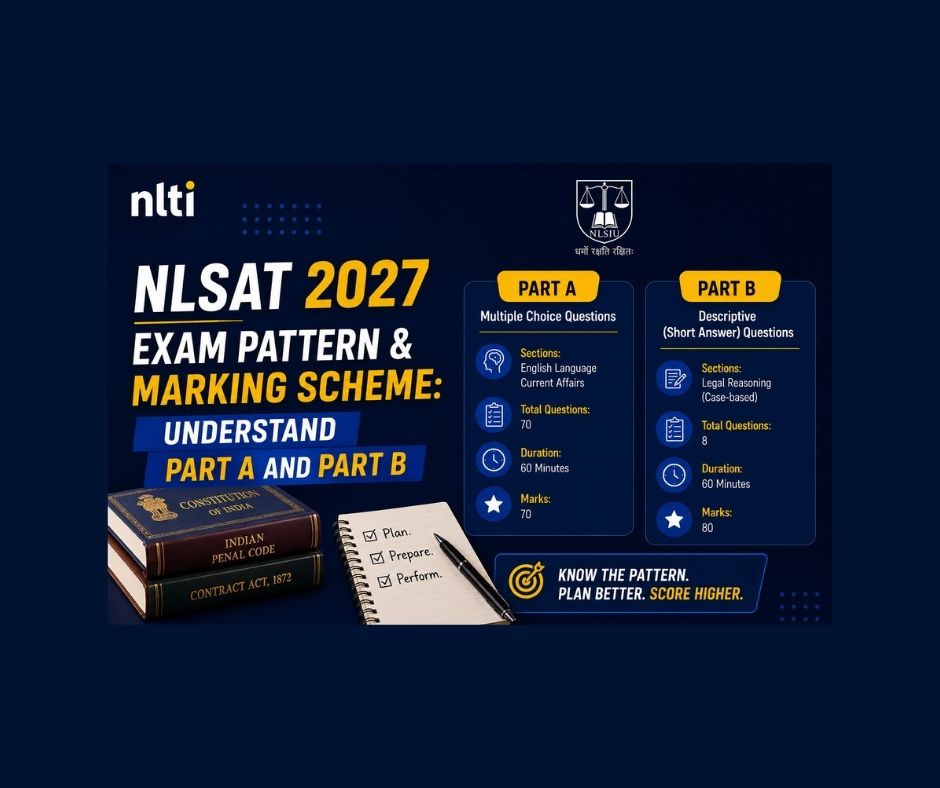
NLSAT Exam Pattern: Where Logical Reasoning Fits
Before understanding the reasoning syllabus, it is important to see how logical reasoning fits into the overall exam pattern.
A strong performance in logical reasoning often improves performance across multiple sections because reasoning skills directly influence reading comprehension and legal reasoning.
Best Books for NLSAT 2027: Complete Preparation Guide
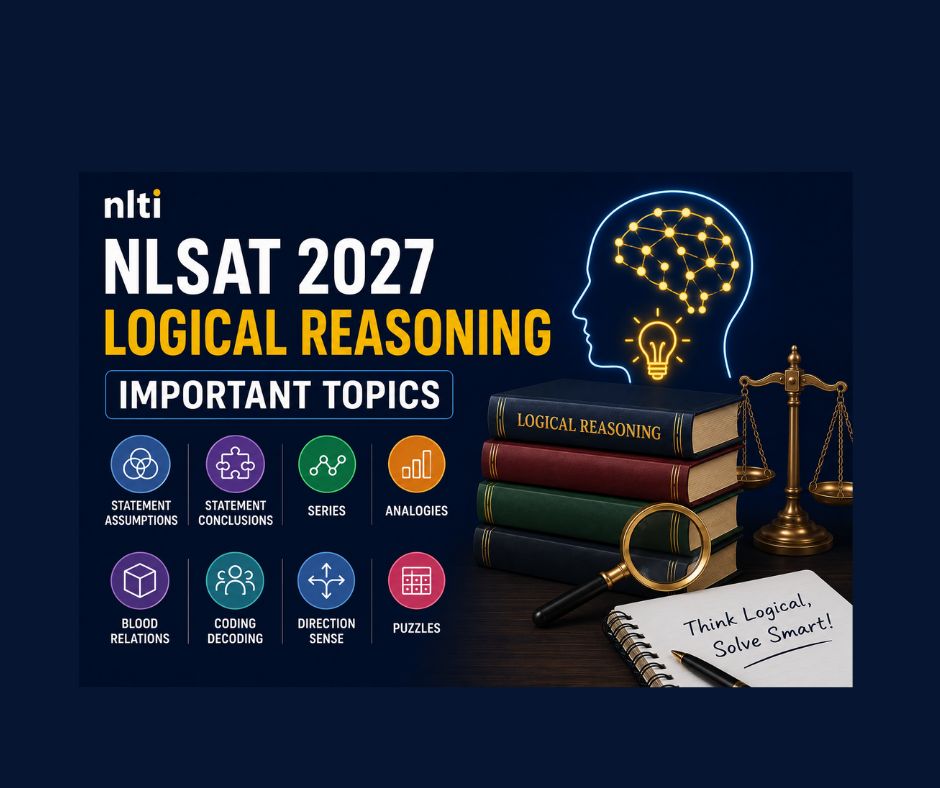
NLSAT Logical Reasoning: Important Topics for 2027
Based on recent NLSAT papers and question trends, the following topics should form the core of your preparation.
1. Inference Questions
Why It Matters
Inference questions consistently appear among the highest-weightage reasoning topics in NLSAT.
These questions test your ability to determine what logically follows from the information provided.
Example
A passage discusses rising urban pollution and increasing health concerns.
The question may ask:
Which conclusion can reasonably be inferred from the passage?
Students must identify conclusions supported by evidence rather than assumptions.
Preparation Strategy
· Practice inference-based passages daily
· Eliminate extreme options
· Focus only on information present in the passage
Priority Level
★★★★★
2. Assumption Questions
Assumption questions test whether you can identify unstated ideas on which an argument depends.
Example
An author argues that online legal education should become compulsory.
The assumption may relate to accessibility, effectiveness, or educational outcomes.
Preparation Strategy
· Identify what must be true for the argument to succeed
· Distinguish assumptions from conclusions
Priority Level
★★★★
3. Strengthen the Argument
These questions require candidates to identify information that strengthens the author's position.
Skills Tested
· Logical consistency
· Evidence evaluation
· Argument analysis
Priority Level
★★★★
4. Weaken the Argument
Among the most frequently tested concepts in analytical reasoning NLSAT.
Students must identify information that undermines the conclusion.
Example
If an argument claims that online classes improve learning outcomes, a weakening statement may show evidence of reduced student engagement.
Priority Level
★★★★★
5. Main Point Questions
These questions evaluate your ability to identify the central idea of a passage.
Common Mistake
Students often select details instead of the primary argument.
Preparation Strategy
Ask:
"What is the author ultimately trying to prove?"
Priority Level
★★★★
6. Purpose Questions
Purpose questions test whether you understand why a particular paragraph, example, or statement was included.
Priority Level
★★★★★
Recent NLSAT papers have featured a substantial number of purpose-based questions.
7. Author's Perspective
Students must identify:
· Tone
· Viewpoint
· Attitude
· Position
Example
Is the author:
· Supportive?
· Critical?
· Neutral?
· Skeptical?
Priority Level
★★★★
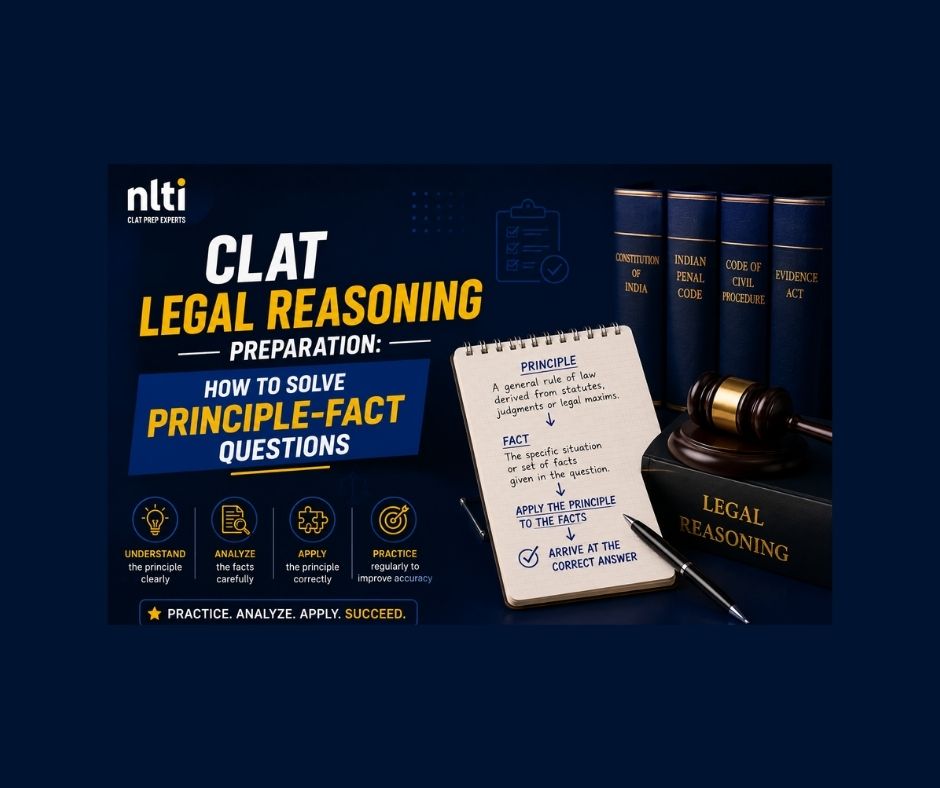
8. Principle-Based Reasoning
This topic appears regularly in NLSAT.
Students are given a principle and must determine how it applies to a factual situation.
Skills Tested
· Application
· Consistency
· Logical interpretation
Priority Level
★★★★
9. Comparison Questions
These questions require students to compare arguments, viewpoints, or concepts.
Although lower in frequency, they still appear occasionally.
Priority Level
★★★
10. Exception Questions
Students identify options that do not fit within a given framework.
Priority Level
★★★
NLSAT Admit Card 2026: Download & Exam Guide
NLSAT Logical Reasoning Topic Weightage
Based on recent paper analysis, aspirants should prioritise preparation as follows:
The highest return on investment comes from mastering Inference, Purpose, and Weaken questions.
NLSAT 2027 Free Mock Tests & Practice Papers Guide
How to Prepare for NLSAT Logical Reasoning
Many students prepare reasoning incorrectly.
They focus on solving random questions instead of developing analytical thinking.
Step 1: Build Reading Ability
Logical reasoning begins with reading.
Develop a habit of reading:
· Editorials
· Opinion pieces
· Legal commentary
· Policy discussions
Step 2: Practice Passage-Based Questions
NLSAT reasoning is passage-driven.
Avoid focusing exclusively on standalone reasoning questions.
Instead:
· Analyse arguments
· Identify assumptions
· Evaluate evidence
Step 3: Maintain an Error Log
After every practice session:
Record:
· Incorrect answers
· Reasoning mistakes
· Recurring weaknesses
This accelerates improvement.
Step 4: Take Sectional Tests
Once fundamentals are clear:
· Attempt timed practice sets
· Build speed
· Improve decision-making
NLSAT 2026 Eligibility: Age, Graduation Criteria
Best Resources for NLSAT Logical Reasoning
Recommended Books
The most effective preparation combines books with NLSAT-specific practice material.
Common Mistakes Students Make
Avoiding these mistakes alone can significantly improve performance.
NLSAT Current Affairs & GK Prep 2027 Guide
How NLTI Can Help You Improve NLSAT Logical Reasoning
Logical reasoning is one of the areas where personalised feedback can make a significant difference.
NLTI's NLSAT preparation programme focuses on:
Structured Reasoning Classes
Topic-wise coverage of the reasoning syllabus NLSAT aspirants need.
NLSAT-Specific Practice
Practice designed around actual NLSAT question patterns.
Mock Analysis
Understanding mistakes rather than merely checking scores.
Personalised Mentorship
Helping students identify and improve weak areas.
Performance Tracking
Monitoring progress through structured evaluation.
NLTI's NLSAT 2026 results, including AIR 1, AIR 2, AIR 4, AIR 5 and AIR 6, demonstrate the value of systematic preparation and expert guidance.
NLSAT 2027 Syllabus, Weightage & Strategy
Final Thoughts
The biggest misconception about NLSAT logical reasoning is that it can be mastered through shortcuts.
It cannot.
Logical reasoning is a skill.
And like every skill, it improves through consistent practice.
The students who perform best in NLSAT are usually those who:
· Read regularly
· Analyse arguments critically
· Practice reasoning consistently
· Review mistakes carefully
· Follow a structured preparation plan
If you focus on the high-priority topics discussed in this guide and build a strong foundation in analytical reasoning NLSAT demands, you will be significantly better prepared for NLSAT 2027.
NLSAT Current Affairs & GK Preparation Guide
Frequently Asked Questions (FAQs)
What is included in the reasoning syllabus NLSAT?
The reasoning syllabus includes inference, assumptions, strengthen and weaken arguments, main point questions, principle-based reasoning, purpose questions, and analytical reasoning.
Which is the most important topic in NLSAT logical reasoning?
Inference questions are generally considered the highest-priority topic based on recent paper trends.
Is logical reasoning difficult in NLSAT?
The difficulty comes from analytical thinking rather than complexity. Regular practice significantly improves performance.
How can I improve analytical reasoning NLSAT questions?
Focus on reading comprehension, argument analysis, inference practice, and mock-test review.
How much time should I dedicate to logical reasoning?
Aspirants should ideally devote 30–45 minutes daily to reasoning practice.
Call to Action
If you are preparing for NLSAT 2027 and want structured mentorship, reasoning practice, mock analysis, and personalized feedback, NLTI's NLSAT preparation programme can help you build a focused strategy from the start.
With NLSAT-specific study material, expert guidance, and a track record of producing top ranks, NLTI helps aspirants maximise their potential and prepare more effectively for one of India's most competitive law entrance examinations.
Get In Touch
Have questions? We'd love to hear from you. Send us a message and we'll respond as soon as possible.