NLSAT 2027: 6-Month Study Plan for NLSIU 3-Year LL.B.
Share this article:

Six months sounds like a lot of time until you sit down and realise that the NLSAT tests reading, reasoning, current affairs, legal aptitude, and essay writing all at once. NLSAT 2027 preparation works best when it is broken into phases rather than tackled all at once, because each skill the exam tests needs a different kind of practice and a different amount of time to mature.
This guide lays out a practical, month by month NLSAT 2027 study plan that you can adapt to your own pace, along with the preparation tips and strategy that actually move the needle in a paper that rewards analytical thinking over memorisation.
Check Out NLSAT Coaching and Mentorship by NLTI
Why NLSAT Preparation Needs a Structured Timeline
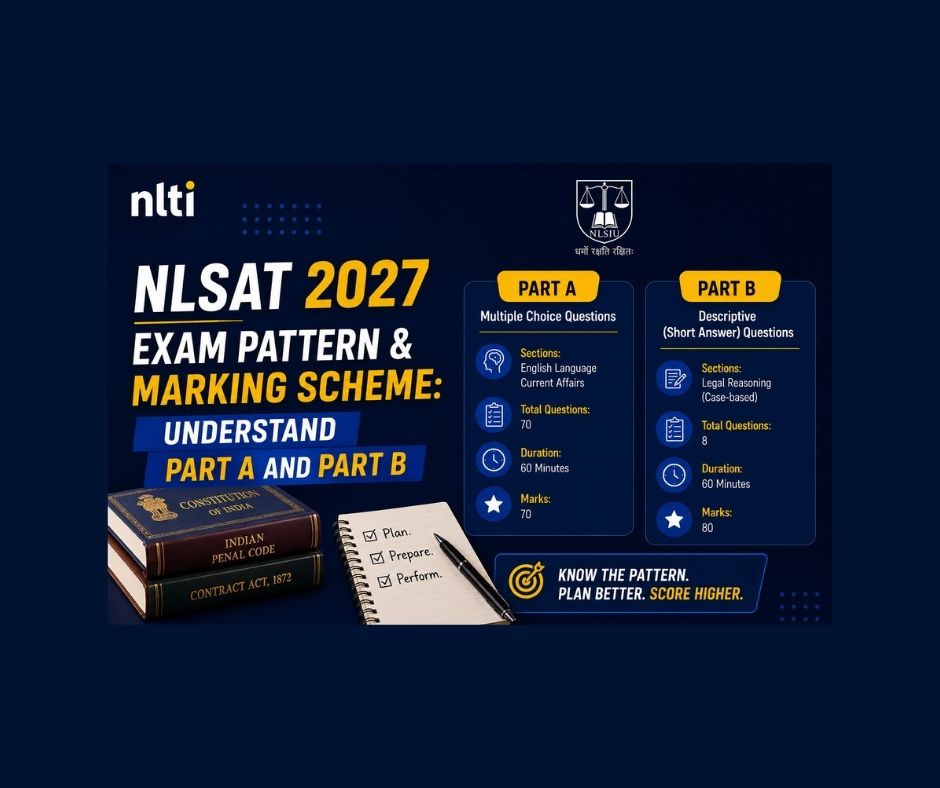
NLSAT-LLB is a 150 minute, 150 mark exam split into Part A (75 objective questions) and Part B (subjective legal aptitude and essay writing). Because Part A carries negative marking of 0.25 for both wrong and unanswered questions, and because Part B marks act as the tiebreaker when total scores are equal, neither section can be prepared at the last minute.
Cramming works for facts. It does not work for inference-based reasoning, comprehension of long passages, or structured essay writing, all of which improve gradually with consistent practice. That is exactly why a phased six-month plan works better than a scattered, topic-jumping approach.
Overview: The 6-Month NLSAT 2027 Preparation Timeline
Each phase builds on the last. Skipping straight to mock tests without foundational practice, or spending all six months on theory without ever attempting a timed paper, are both common mistakes that hurt final scores.
NLSAT 2027 Free Mock Tests & Practice Papers Guide
Month 1: Foundation and Diagnosis
The first month is not about solving hundreds of questions. It is about understanding where you stand and building base habits.
What to Do
Take one diagnostic mock covering Part A and Part B to identify weak areas.
Start a daily reading habit with editorials and long-form opinion pieces.
Begin a current affairs notebook, organised by theme rather than by date.
Read through sample Part B legal aptitude problems to understand the question format.
Why This Matters
Reading Comprehension and Critical Reasoning in NLSAT reward candidates who can identify inference, purpose, and the author's perspective rather than those who read quickly. Building this habit early gives the skill months to mature instead of weeks.
Month 2-3: Skill-Wise Deep Practice
This is the longest phase, and deliberately so. Reading speed, inference accuracy, and legal reasoning application are skills that need repeated exposure to different question styles.
Reading Comprehension and Critical Reasoning
Practise one passage daily, focusing on inference, weaken, and strengthen questions.
Review every wrong answer to understand why the correct option was correct, not just what the correct option was.
Gradually move from shorter passages to longer, denser ones to build reading stamina.
Legal Aptitude
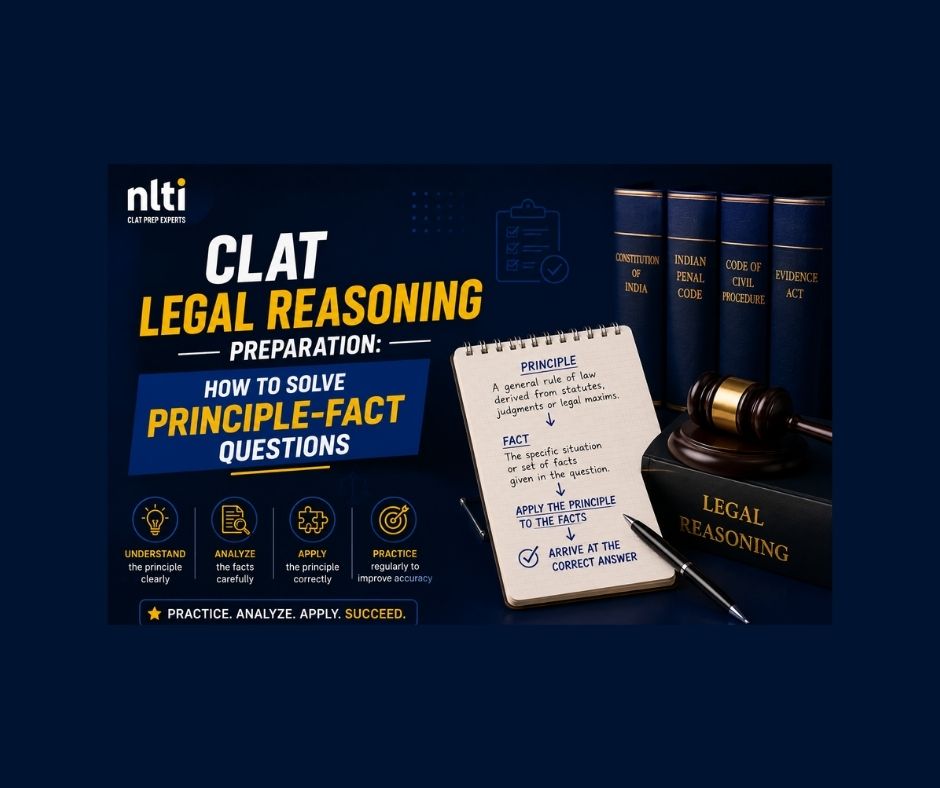
Solve principle-based problems where the rule is given in the question itself.
Practise applying the same principle to slightly varied facts, since NLSAT tests application, not recall of law.
Write short, structured answers rather than long unfocused ones.
Current Affairs
Instead of memorising dates and names, ask why an event matters legally, politically, or socially.
Focus on constitutional developments, governance issues, and public policy debates, since these carry consistently high priority.
NLSAT 2027 Exam Pattern & Marking Scheme Explained
Month 4: Current Affairs Integration and Essay Writing
By month four, your reading and reasoning skills should be reasonably steady. This is the point to bring in structured essay writing, since it is one of the most neglected parts of NLSAT preparation.
Building the Essay Writing Habit
Part B essays are evaluated on how well you frame the issue, apply reasoning to it, and consolidate your argument into a coherent structure. Practising this skill takes repetition, not a single week of cramming before the exam.
A useful weekly essay routine:
Pick a contemporary issue from your current affairs notes.
Spend 10 minutes outlining the issue and breaking it into distinct sub-points.
Write a timed essay applying reasoning to each sub-point separately.
Review your own essay a day later and check whether the conclusion actually follows from your arguments.
Aim for at least one full essay every week from this month onward, alongside continued Part A practice so neither section falls behind.
Month 5: Full-Length Mocks and Error Analysis
Mock tests only help if they are followed by honest analysis. This month should shift the balance from isolated practice to full 150-minute simulations.
Mock Test Strategy
Take at least one full-length mock every week under timed, exam-like conditions.
Attempt Part A and Part B together in one sitting to build stamina for the real exam duration.
Spend at least as much time analysing a mock as you spent taking it.
What to Track After Each Mock
NLSAT Admit Card 2026: Download & Exam Guide
Month 6: Revision, Speed, and Exam Simulation
The final month is about consolidation, not new learning. Introducing unfamiliar topics or question types this close to the exam usually creates unnecessary anxiety.
Final Month Priorities
Revisit your current affairs notes in summary form rather than reading fresh material.
Take two to three more full-length mocks, spaced out so you have time to review each one.
Revisit past essays you have written and identify recurring structural weaknesses.
Practise timing strategy for Part A so you are not rushing through the last 15-20 questions.
Get comfortable with the offline, pen-and-paper format if you have been practising primarily on screen.
By the final week, your goal is steady, confident execution of habits you have already built rather than last-minute topic coverage.
Common Mistakes to Avoid During NLSAT 2027 Preparation
Treating Part B as an afterthought after focusing only on Part A.
Preparing current affairs as isolated facts instead of understanding their significance.
Skipping mock analysis and simply moving on to the next mock.
Ignoring negative marking while deciding which Part A questions to attempt.
Starting essay writing practice too late to build real structure and fluency.
NLSAT Current Affairs & GK Prep 2027 Guide
Final Thoughts
A structured, phase-wise approach to NLSAT 2027 preparation gives every skill area, from reading comprehension to essay writing, enough time to actually improve rather than being crammed in the final weeks. The candidates who consistently perform well are usually the ones who treat Part A and Part B as equally important from month one, track their mock performance honestly, and build writing skills gradually rather than suddenly.
If you follow this NLSAT 2027 study plan consistently, adjusting the pace to your own strengths and weaknesses, you give yourself a realistic six-month runway to walk into the exam prepared rather than rushed.
Get Expert Guidance for NLSAT 2027
Structured mentorship, personalised mock analysis, and dedicated answer-writing feedback can significantly reduce the guesswork in your preparation. If you want a preparation plan tailored to your own strengths and weaknesses, explore NLTI's NLSAT coaching and mentorship programmes.
FAQs
1. Is six months enough time to prepare for NLSAT 2027?
Yes, six months is generally enough if the time is used in a structured, phase-wise manner covering reading comprehension, critical reasoning, legal aptitude, current affairs, and essay writing, rather than being spent on unstructured or last-minute preparation.
2. How should I split my time between Part A and Part B during preparation?
Since Part A and Part B carry equal maximum marks, both should receive consistent weekly attention throughout your preparation rather than treating Part B as something to start only in the final weeks.
3. Do I need to study law before starting NLSAT preparation?
No. NLSAT does not require prior legal knowledge. Legal aptitude questions provide the relevant principle within the question, and the essay in Part B tests reasoning and writing ability rather than legal knowledge.
4. How many mock tests should I take before the exam?
A reasonable approach is to begin full-length mocks around month five, taking one per week, and continuing into month six with two to three more, spaced out enough to allow proper review after each attempt.
5. What is the best way to prepare current affairs for NLSAT?
Focus on understanding the legal, political, and policy significance of events rather than memorising isolated facts. Organising notes by theme, such as constitutional developments or governance issues, tends to work better than a date-wise list.
6. How important is essay writing practice for NLSAT 2027?
It is essential. Part B essays are evaluated on issue framing, reasoning, and structure, all of which improve only with regular, timed practice over several months, not through last-minute preparation.
7. Should I worry about negative marking while attempting Part A?
Yes. Since both wrong answers and unanswered questions are penalised equally in Part A, your attempt strategy should be based on reasonably informed judgment rather than either blind guessing or excessive caution.
8. What should I do if my mock scores are not improving?
Shift focus from taking more mocks to analysing existing ones more thoroughly. Identify whether errors come from misreading passages, misapplying reasoning, or time pressure, since each requires a different correction.
9. Can working professionals or final-year students follow this same study plan?
Yes, though the daily practice load may need to be adjusted around existing commitments. The phase-wise structure itself, foundation, skill practice, integration, mocks, and revision, remains useful regardless of how many hours are available each day.
10. What should the last week before NLSAT look like?
The final week should focus on light revision of current affairs notes, review of past essays and mock analysis, and confidence-building rather than introducing new topics or question types.
Get In Touch
Have questions? We'd love to hear from you. Send us a message and we'll respond as soon as possible.