How to Prepare for NLSAT 2027: Beginner’s Guide
Share this article:
Starting a law entrance exam without any background can be overwhelming. Maybe you don’t know what to read, or where to start, or if you’re already behind. You Aren't. This guide to NLSAT 2027 is for class 11 and 12 students, droppers and parents looking for a calm and practical starting point.
Check Out NLSAT Coaching and Mentorship by NLTI
What Is NLSAT?
The National Law School Aptitude Test (NLSAT) is an entrance test associated with the National Law School of India University (NLSIU), Bengaluru. It is a gateway to law education, so a structured approach matters.
Important: Exam dates, eligibility, syllabus, pattern, fees, seats and cut-offs can change from year to year. This guide does not state them. Please confirm every detail on the official NLSIU website and in the official notification before you plan your preparation for NLSAT 2027.
Understand the Exam Pattern and Syllabus First
Before buying any book, read the official notification carefully. It is the only reliable source for the NLSAT syllabus and exam pattern.
While reading it:
Note the sections, question types and marking scheme.
Check the exam duration and mode.
Write the key points in your own words in one notebook page.
Re-read the notification whenever a new one is released.
This one step prevents wasted effort. Many beginners study from outdated blogs or social media posts and prepare for the wrong thing.
NLSAT 2027 Current Affairs: Legal & National Issues
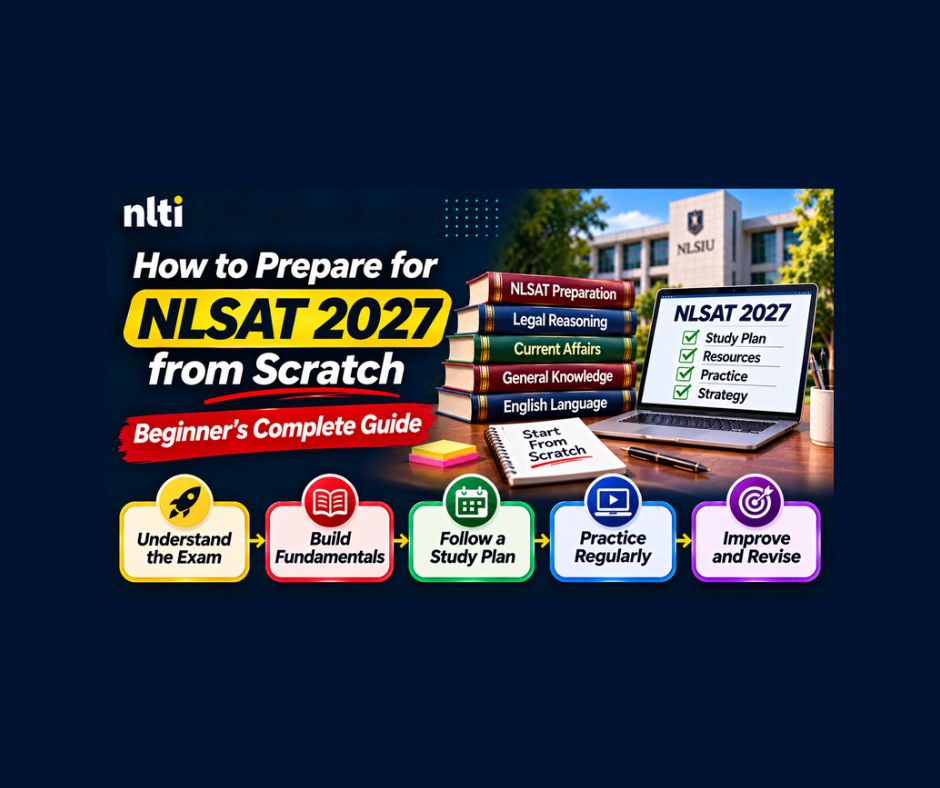
Step-by-Step Roadmap: NLSAT Preparation from Scratch
Law aptitude exams generally test reading, language, reasoning, legal thinking and awareness of the world. Use the official notification to confirm which of these apply to NLSAT 2027, then build habits in each area.
Step 1: Build a Reading Habit
Reading is the base of everything else. Start with 20–30 minutes daily. Read editorials, opinion pieces and simple non-fiction. Summarise each article in two lines. Your speed and comprehension will improve with regular practice.
Step 2: Strengthen English and Grammar
Revise core grammar: tenses, subject-verb agreement, prepositions and sentence structure. Add vocabulary from your daily reading, noting each new word in a sentence. Beginners should focus on understanding rather than memorising long word lists.
Step 3: Learn Logical Reasoning Basics
Start with simple arguments: identify the premise, the conclusion and any assumption. Practise a few questions daily and always read the explanation, even when your answer is right.
Step 4: Learn Legal Reasoning Basics
You do not need prior legal knowledge. Legal reasoning usually involves applying a given principle to a given set of facts. Practise reading a rule carefully and testing it against a situation. Build general legal awareness gradually through newspapers and basic civics.
Step 5: Build General Awareness and Current Affairs
Follow a reliable newspaper and make short notes on important national and international developments, courts, policies and awards. Revise these notes weekly.
Subject-Wise Quick Guide
Daily and Weekly Study Routine
A realistic NLSAT study plan beats an ambitious one you abandon in a week. Adjust the hours below to your school or college schedule.
A sample day:
30 minutes: newspaper and editorial reading
30–45 minutes: English and grammar
30–45 minutes: logical or legal reasoning practice
20 minutes: current affairs notes
10 minutes: quick review of the day
A sample week:
Monday to Friday: rotate the subjects above
Saturday: timed practice and revision of the week’s notes
Sunday: rest, light reading, and planning the next week
Class 11 and 12 students can reduce the hours during exams. Droppers can extend them, with regular breaks.
NLSAT Books and Resources
You do not need a large pile of material. For NLSAT books and resources, keep it simple:
Newspapers: one national daily, read consistently.
Books: a standard grammar book, a beginner-friendly reasoning book, and a legal aptitude practice book suited to law entrances.
Online resources: free editorial archives, quiz platforms and the official NLSIU website, including any sample material it provides.
Notes: a single notebook or app for vocabulary, current affairs and errors.
Choose one resource per topic and finish it before adding another.
When to Start Mock Tests and How to Analyse Them
Begin mocks once you have covered the basics of each section, not on day one. Early mocks are for learning, not for judging yourself.
After every mock:
Note your attempts, accuracy and time per section.
Review every wrong answer and every lucky guess.
Record the reason: concept gap, careless error or time pressure.
Revisit weak topics before the next mock.
Analysis matters more than the number of mocks. One well-reviewed mock teaches more than three rushed ones.
NLSAT 2027 Exam Date: Important Dates, Eligibility, Pattern and Preparation
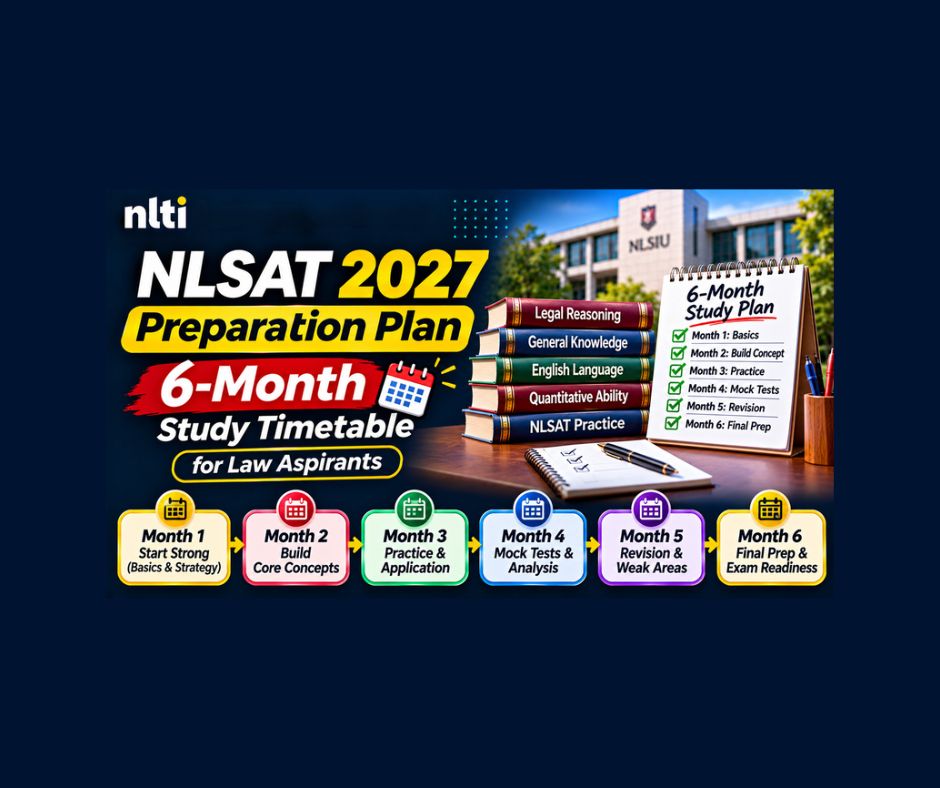
Simple Phase-Wise Study Plan for NLSAT 2027
Timelines vary by student, so this plan uses phases rather than fixed durations. Move forward when you feel ready.
Common Beginner Mistakes
Relying on unofficial sources for the pattern or syllabus
Buying too many books and finishing none
Ignoring newspaper reading until the last moment
Taking mocks without analysing them
Comparing your progress with others
Studying irregularly, then trying to cover everything in a few days
Staying Consistent and Managing Stress
Consistency is born of small repeatable habits. “Set a fixed time to study, keep track of your streak, and reward yourself weekly.” Sleep, movement and breaks are part of getting ready.
If you’re feeling anxious, don’t give up, but cut back on your daily target. Speak to a parent, teacher or mentor. Instead of constant comparison, parents can help by providing encouragement and a quiet place to study.
When to Think about Coaching or Mentorship
Many students prepare themselves successfully. If you are not able to judge your own mistakes, or you want a structured plan and feedback, guidance can help. If you are not consistent,
You can also explore CLAT NLTI for NLSAT 2027 coaching or mentorship. Please compare with today’s programs, faculty, schedules and fees directly with the team and other options before deciding. Choose what suits your learning style, budget, and goals.
NLSAT 2027: Common Preparation Mistakes to Avoid
Conclusion
Preparing for NLSAT 2027 from scratch is not very difficult if you start with the official notification, develop reading and reasoning habits and maintain a steady routine. Small steps consistently is progress. If you would like personalised guidance then you can enquire or book a counselling session with CLAT NLTI to discuss your situation. There is no obligation to join.
FAQs
1. I don't have any law background, can I start preparing for NLSAT?
Yes. Most beginners do not know the law. First, develop reading, English and reasoning skills. Add legal consciousness in small doses.
2. How to know the right syllabus for NLSAT?
Follow official notification & website of NLSIU only. Third party summaries may be outdated or incomplete.
3. When do I start mock tests?
Once you have gone through the basics of each section, you can start. Use early mocks to identify weak areas, then ramp up frequency as confidence builds.
4. Is coaching necessary for NLSAT 2027?
No. It’s a personal choice. Self-study works for lots of students, but some students want structure and feedback.
5. How many hours should a beginner study daily?
It is contingent upon when you are available. A consistent two to three hours with school/college is a good place to start. Build up gradually without burning out .
Get In Touch
Have questions? We'd love to hear from you. Send us a message and we'll respond as soon as possible.