CLAT 2028: Exam Date, New Pattern & Syllabus Guide
Share this article:
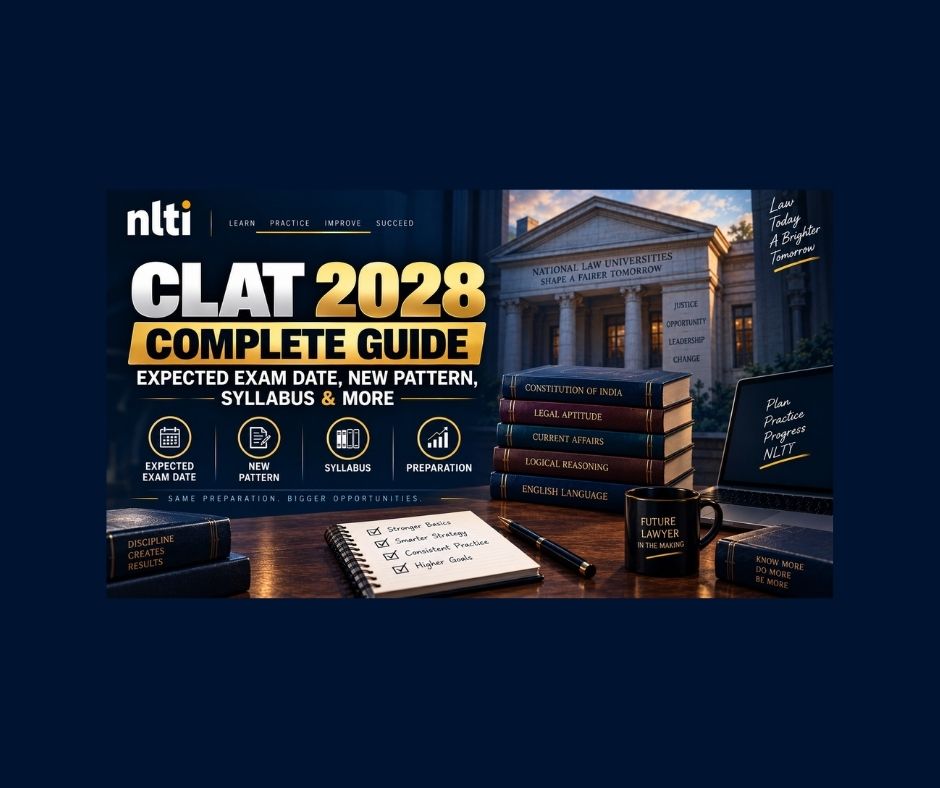
Planning to appear for CLAT 2028? The exam is expected to be conducted in December 2027. Typically, the CLAT exam is held on the first Sunday of December.
While the official CLAT 2028 notification is still awaited, the Consortium has already considered major reforms to the undergraduate exam through its Expert Committee. These proposed changes could affect the CLAT 2028 exam pattern, syllabus and number of questions. For a deeper dive into these structural changes, you can check out our detailed analysis on the CLAT 2028 Exam Pattern.
This guide covers the important details you need to know about CLAT 2028.
Important: CLAT 2028 dates and the final exam pattern have not been officially announced yet. Expected details below are based on the current CLAT cycle and proposed reforms.
CLAT 2028: Quick Overview
CLAT 2028 Exam Date & Timeline
The CLAT 2028 exam date has not been announced. Based on the current CLAT schedule, the exam is expected to take place in December 2027 (usually on the 1st Sunday of December).
Expected Timeline
These dates are only expected. The Consortium will confirm the actual schedule through the official notification.
CLAT Preparation in 3 Months: 90-Day Study Strategy
CLAT 2028 Registration & Application Fee
The CLAT 2028 registration is expected to begin around August 2027.
Registration Steps
Register on the official CLAT portal
Fill in personal and academic details
Upload required documents
Select preferences
Pay the application fee
Submit the application
Application Fee Details
The CLAT 2028 application fee has not been announced yet. Candidates should wait for the official notification for the exact amount.
For reference, the CLAT 2027 application fee is ₹4,000 for General category candidates and ₹3,500 for SC/ST/BPL candidates.
CLAT 2028 Eligibility Criteria
The final CLAT 2028 eligibility criteria will be announced with the notification.
Eligibility Rules
Have passed Class 12 or an equivalent examination.
Are appearing for their Class 12 examination.
Meet the prescribed minimum marks.
Fulfil the category-specific eligibility requirements.
There is currently no upper age limit for CLAT UG.
For complete eligibility details, see our CLAT eligibility guide.
CLAT 2028 Exam Pattern: Current vs Expected
The biggest development for CLAT 2028 is the proposed change in the exam structure. For more insights on this shift, refer to our guide on the CLAT 2028 Exam Pattern.
Current CLAT UG Pattern (5 Sections & Question Breakdown)
The current CLAT examination follows this five-section, 120-question structure.
Proposed CLAT 2028 Pattern (3 Sections)
The proposal also suggests around 10–15 questions per section, which would mean a much shorter paper than the current 120-question format. However, these are proposed changes, not the final CLAT 2028 pattern.
Key Questions & Shifts
Will GK Be Removed From CLAT 2028?
The Expert Committee has proposed removing Current Affairs and General Knowledge as a separate section. This does not mean GK has already been removed. The final CLAT 2028 syllabus is still awaited. Until the Consortium releases the official pattern, students should continue following important current affairs while focusing strongly on reading and comprehension.
What Could Change in CLAT 2028?
The proposed reforms indicate a shift towards:
More reasoning
Stronger comprehension
Greater application-based questions
Legal aptitude
Fewer questions
Less emphasis on speed
Three broader sections instead of five
The focus could move from attempting a large number of questions to understanding and solving questions more deeply.
CLAT 2028: Exam Date, Eligibility, Syllabus & Strategy
CLAT 2028 Syllabus
The final syllabus will depend on the officially announced pattern. For now, students should focus on:
1. Language & Comprehension (Current: 22–26 Questions)
Reading comprehension
Inference
Main idea
Tone
Arguments
2. Logical Reasoning & Legal Aptitude (Current LR: 22–26 Qs | Current Legal: 28–32 Qs)
Critical reasoning
Arguments
Assumptions
Conclusions
Principle-fact application
Logical analysis
3. Quantitative Techniques (Current: 10–14 Questions)
Percentages
Ratios
Averages
Profit and loss
Time and work
Time, speed and distance
Data interpretation
Current affairs (currently 28–32 questions) should also remain part of your preparation until the final syllabus is announced.
Preparation Strategy & Action Plan
How Should You Prepare for CLAT 2028?
You do not need to completely change your preparation because of the proposed reforms. Focus on skills that are useful under both the current and proposed formats:
Read regularly → Build reasoning skills → Practise legal aptitude → Strengthen Quant → Solve passages → Analyse your mistakes
If you are starting in Class 11, focus on fundamentals first. Increase sectional practice and mocks gradually. For detailed preparation guidance, see our CLAT preparation guide.
What Should CLAT 2028 Aspirants Do Right Now?
The final pattern may change, but your preparation does not have to. For now:
Build a daily reading habit.
Practise logical reasoning.
Start legal reasoning early.
Strengthen basic Quant.
Follow important current affairs.
Practise passage-based questions.
Keep track of official Consortium updates.
Once the final CLAT 2028 exam pattern is announced, you can adjust your preparation accordingly.
Summary: Current vs Expected Pattern
Frequently Asked Questions
1. When will CLAT 2028 be conducted?
CLAT 2028 is expected to be conducted in December 2027 (usually on the 1st Sunday of December). The exact date will be announced by the Consortium.
2. When will CLAT 2028 registration start?
Registration is expected to begin around August 2027 and may continue until October 2027.
3. Will CLAT 2028 have a new pattern?
A new three-section structure has been proposed by the Expert Committee. The final pattern is yet to be announced.
4. Will CLAT 2028 have three sections?
The proposed structure has three sections: Language & Comprehension, Logical Reasoning & Legal Aptitude, and Quantitative Techniques.
5. Will GK be removed from CLAT 2028?
The removal of Current Affairs and GK as a separate section has been proposed. It is not yet a confirmed change.
6. How many questions will CLAT 2028 have?
The proposed pattern suggests around 10–15 questions per section. The final number will be confirmed by the Consortium.
7. Should I stop studying current affairs for CLAT 2028?
No. Until the final syllabus is announced, students should continue following important current affairs and building their reading skills.
Start Preparing for CLAT 2028 With NLTI
Starting early gives you time to build the reading, reasoning and aptitude skills needed for CLAT.
NLTI's CLAT 2028 preparation programme combines structured preparation with regular practice and mentorship to help students prepare systematically from Class 11 onwards.
Get In Touch
Have questions? We'd love to hear from you. Send us a message and we'll respond as soon as possible.